Brand highlight · Since 1967

Tacchini.

A family.
An archive.
A way of living.

From a workshop in Brianza to a collection that brings generations of design into the same room. The people, ideas and objects behind one of Italy’s most distinctive furniture houses.

Founded1967
OriginSeveso, Italy
PerspectivePast + present
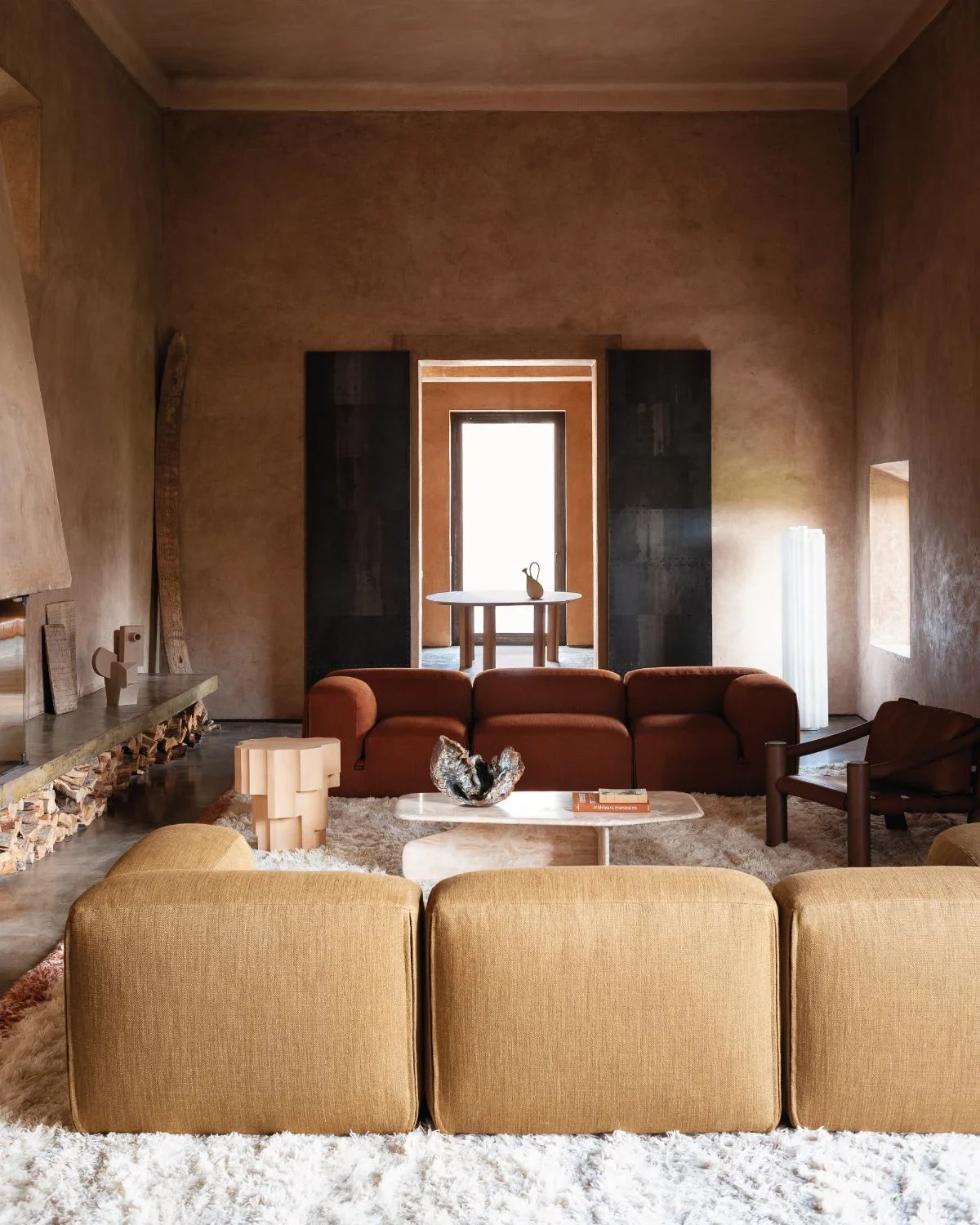
Le Mura seating in a warm, textured interior from Tacchini’s Home Collection
Le Mura · Mario Bellini · Photography courtesy of Tacchini
The Kiosk perspective

Some furniture companies are defined by a single visual language. Tacchini is defined by the conversations it makes possible.

A rounded sofa by a contemporary Swedish designer can sit beside an Italian chair conceived decades earlier. A sculptural concrete table can bring tension to a room filled with soft upholstery. What holds these objects together is a sensitivity to proportion, texture and the experience of living with them.

At Kiosk, that is what makes the collection compelling: it offers the freedom to compose a room rather than repeat a matching set. This portrait follows the family behind the brand, the rediscovery of significant historic designs and the contemporary collaborators moving its story forward.

01 · Brand portrait

A family story,
rooted in Brianza.

The name on the furniture is also the name of the family that built the company.

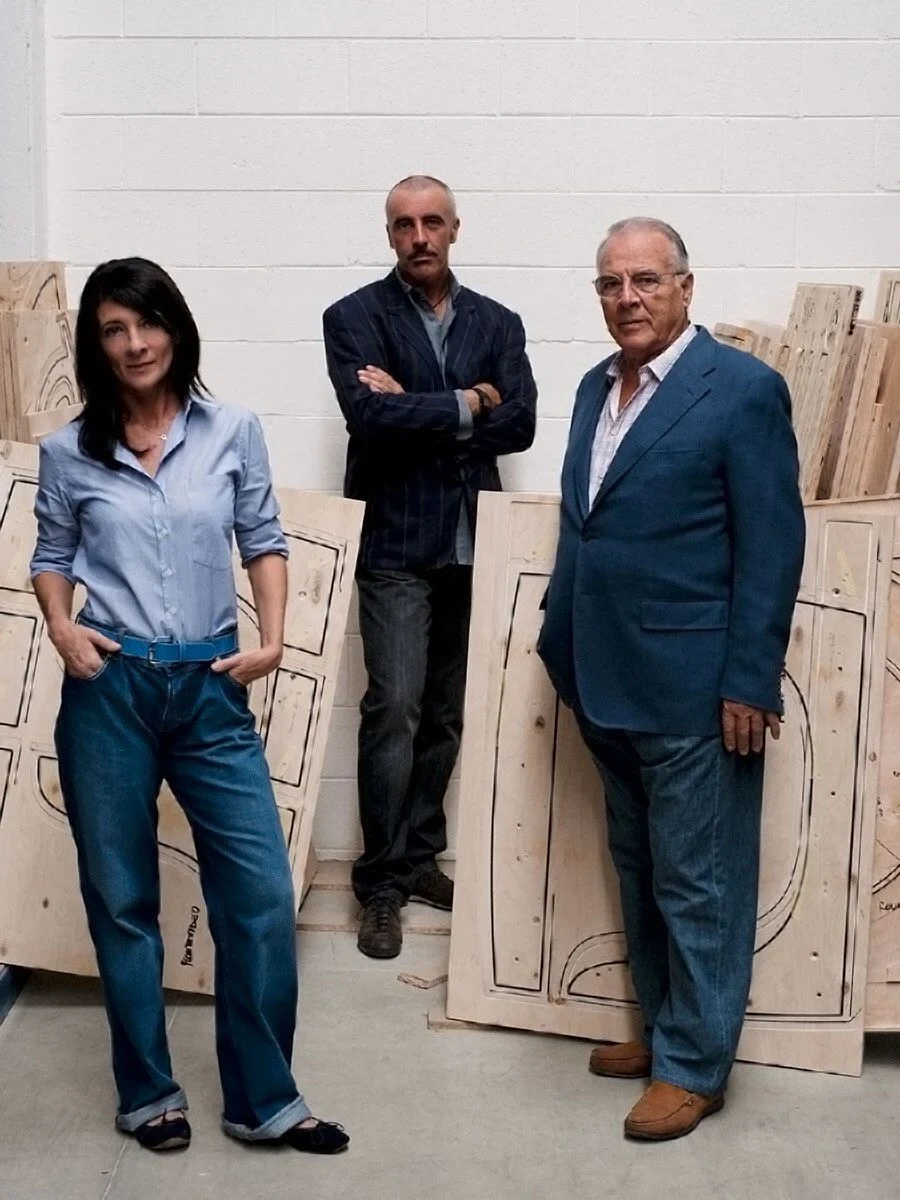
Giusi, Maurizio and Antonio Tacchini in the family workshop
The Tacchini family: Giusi, Maurizio and founder Antonio · Courtesy of Tacchini

Antonio Tacchini founded the company in 1967 in Seveso, in the Brianza furniture district. It began as a carpentry workshop before developing into an international furniture brand. Its origins remain important to understanding the collection: construction, material knowledge and the ability to turn a drawn idea into a tangible object sit at the centre of the business.

Brianza, between Milan and Como, gives that story a particular setting. Tacchini’s account of its own history emphasises the skills of local makers, built through experience and passed between generations. The workshop is a place where a material is handled, evaluated and transformed; design depends on that practical intelligence.

Antonio’s children, Giusi and Maurizio, form part of the next generation of this family history. The company’s public narrative places Giusi at the centre of its creative direction, while preserving the connection to its founder and to the craft culture in which she grew up.

Company history ↗
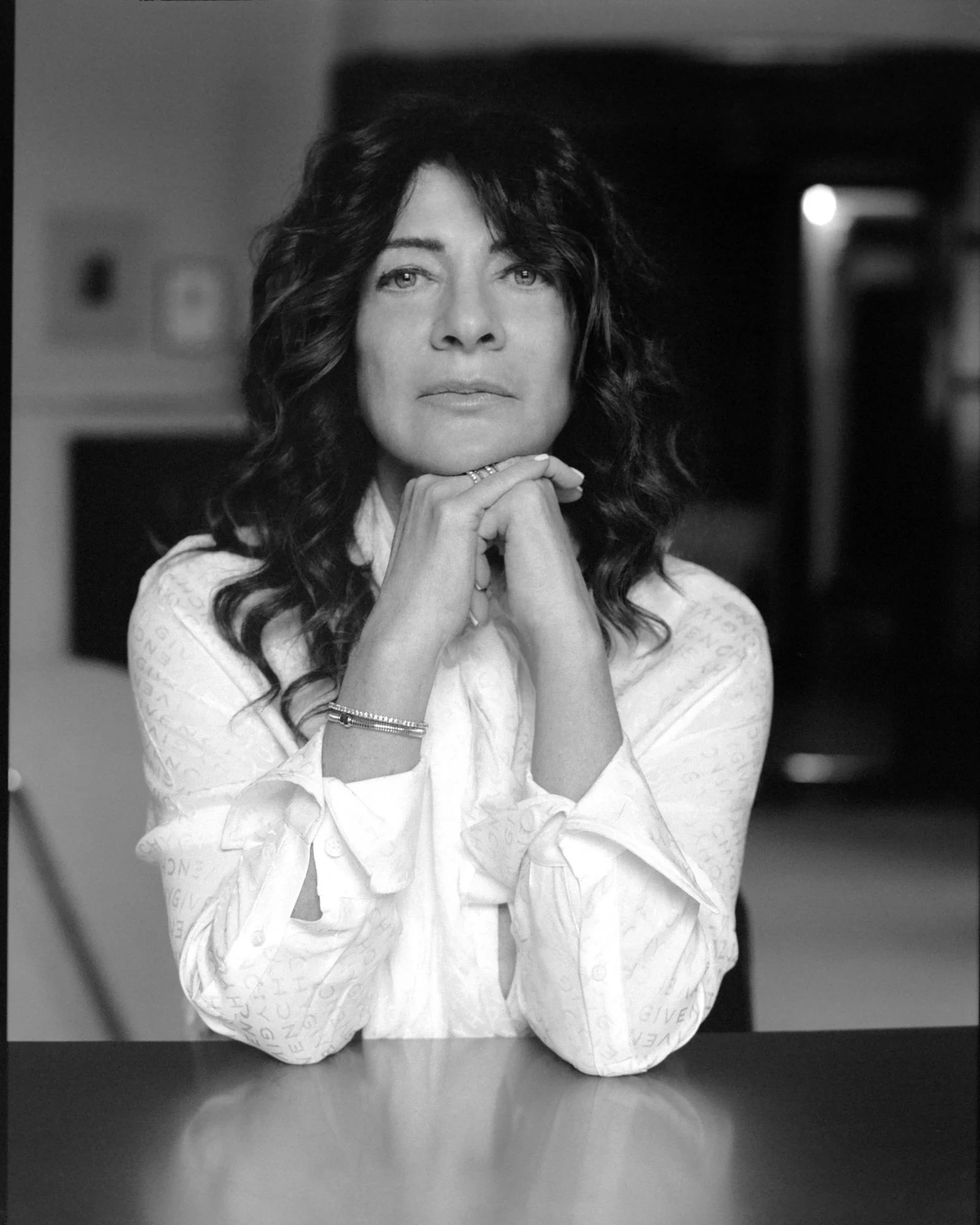
Portrait of Giusi Tacchini
Giusi Tacchini · CEO and Art Director · Courtesy of Tacchini

Giusi Tacchini: curiosity as a creative method.

Giusi entered the business in the early 2000s and is identified by the brand today as CEO and Art Director. Her approach joins the workshop’s inherited knowledge with an outward-looking interest in international designers and the archives of earlier masters.

She has described an early ambition to become an archaeologist. The connection is revealing: her work with historic furniture begins with research, then moves into conversations with designers or their heirs. A re-edition becomes a relationship, with attention to the original idea and to what will allow it to live convincingly in the present.

In the brand’s account, access to the Castiglioni family archive in 2010 helped clarify that direction. The resulting catalogue treats rediscovery as a continuing activity, alongside the commissioning of new work. Giusi’s role is to bring these different voices together while maintaining the recognisable character of Tacchini.

Read the Tacchini story ↗
Selected milestones

The story in time.

  1. 1967

    Antonio Tacchini establishes the company in Seveso, Brianza.

  2. Early 2000s

    Giusi joins the family business; international design collaborations develop.

  3. 2010

    The re-editions path takes shape through research into the Castiglioni archive.

  4. 2015

    Tacchini reintroduces Gianfranco Frattini’s Sesann.

  5. 2018

    Jonas Wagell designs Julep, now a defining contemporary collection.

  6. 2022

    Le Mura returns in collaboration with Mario Bellini; the company dates the launch of its Flock initiative to this year.

  7. 2026

    Butter expands, new lacquer finishes enter the collection and historic design continues to evolve.

02 · Brand portrait

An archive
that keeps living.

Tacchini’s re-editions preserve a design idea while giving it a new place in everyday life.

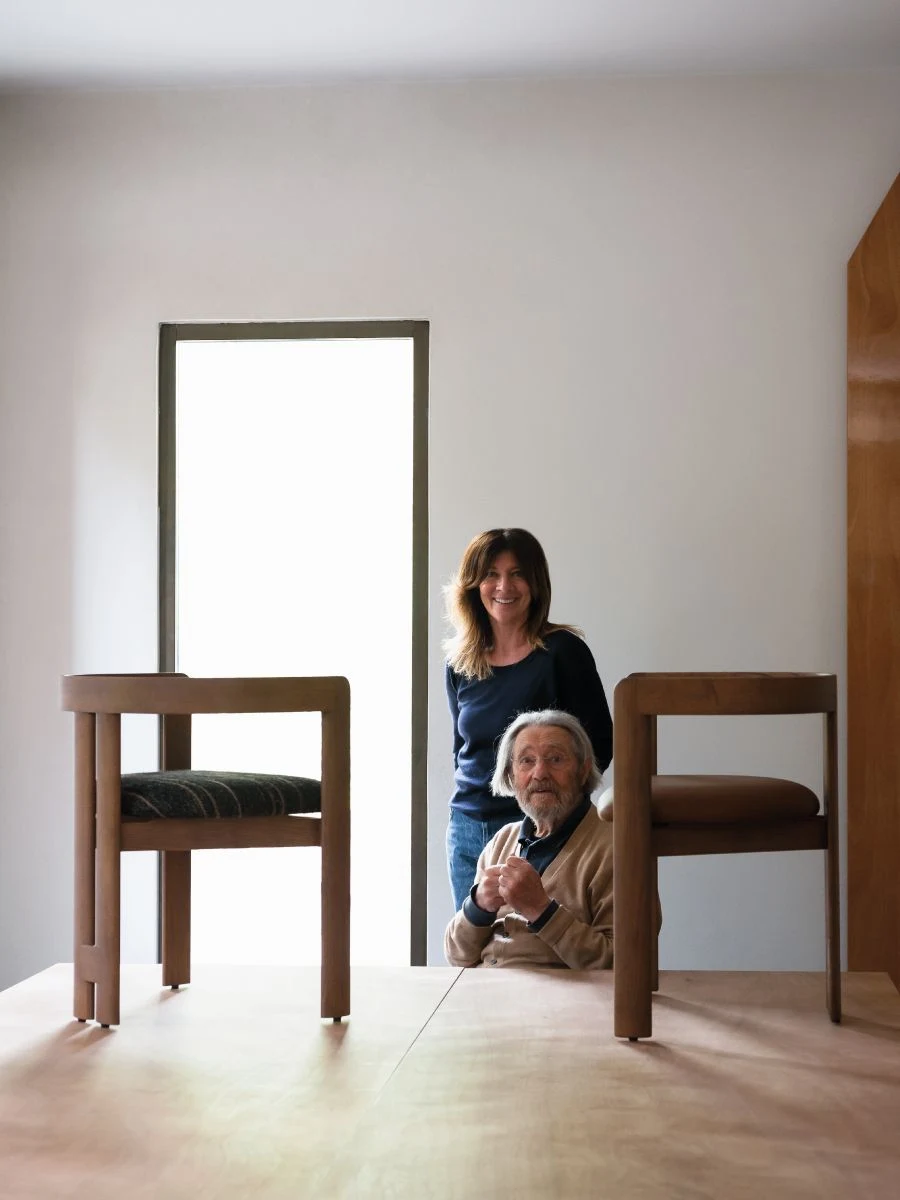
Giusi Tacchini and Tobia Scarpa with wooden chairs
Giusi Tacchini and Tobia Scarpa · Courtesy of Tacchini

The re-editions programme began around 2010. Babela, originally designed in 1958 by Achille and Pier Giacomo Castiglioni, was an early marker of the company’s interest in bringing overlooked or less accessible designs back into use. Today, the programme includes work by Mario Bellini, Gianfranco Frattini, Tobia Scarpa, Joe Colombo, Gastone Rinaldi and other significant figures.

A re-edition is a newly produced piece based on a historic design. It is distinct from buying a vintage example: the underlying idea comes from an earlier moment, while the current production, finishes and construction belong to the manufacturer’s present collection. The details differ by product and should be considered individually.

For us, the most interesting consequence is freedom from period styling. These pieces can be used in contemporary rooms because their proportions and underlying ideas still have force. A chair’s structural clarity, a sofa’s modular logic or a lamp’s control of light can remain relevant long after the circumstances of its first appearance.

Explore the re-editions ↗
03 · Brand portrait

Different forms.
A shared generosity.

The sofas that make Tacchini’s approach immediately recognisable.

Four collections offer a useful introduction to the brand. Each has a different author and a different organising idea: a wall of modules, upholstery held by a metal frame, a continuous curve and a landscape of soft forms. The common thread is an interest in comfort that also changes the way a room is composed.

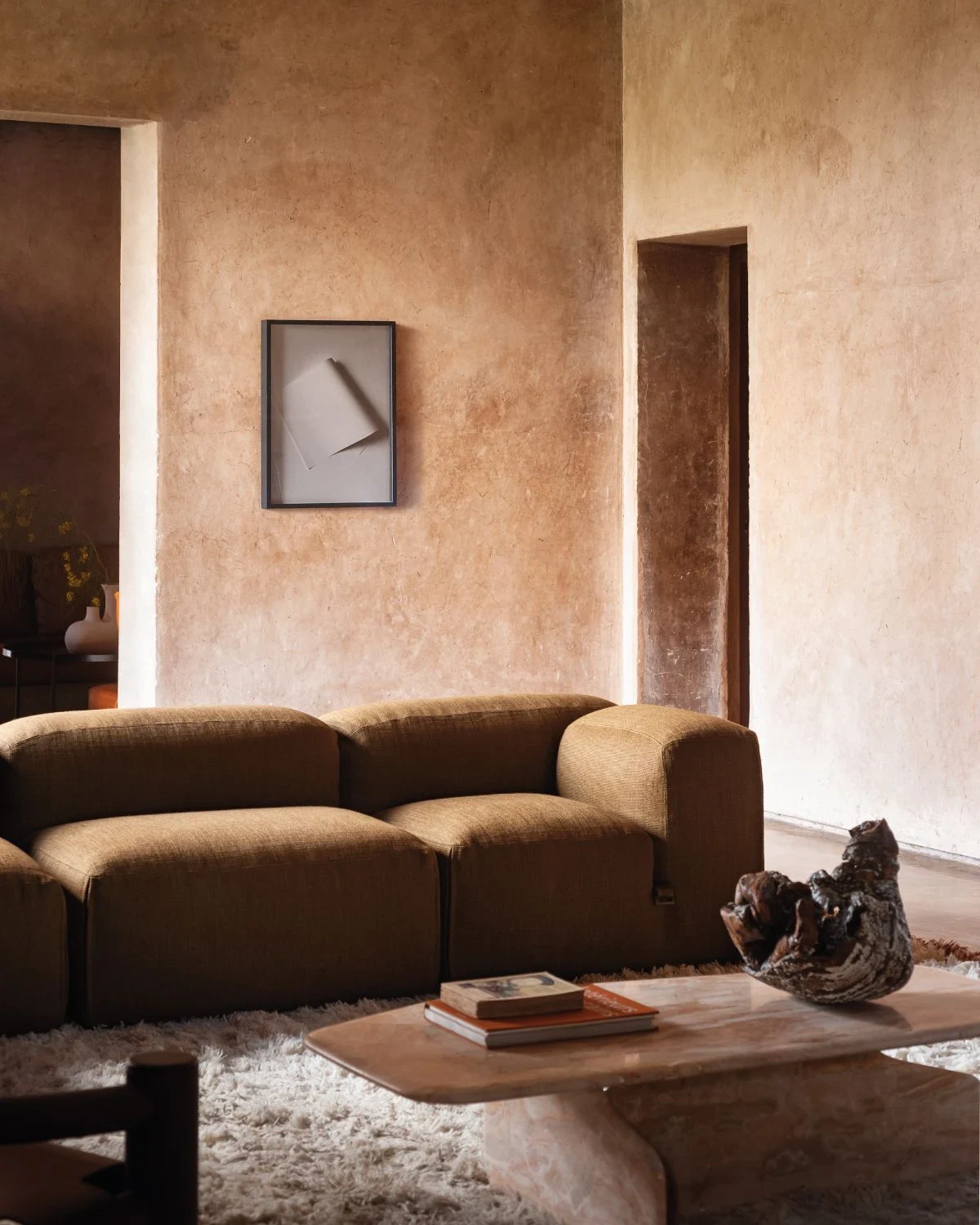
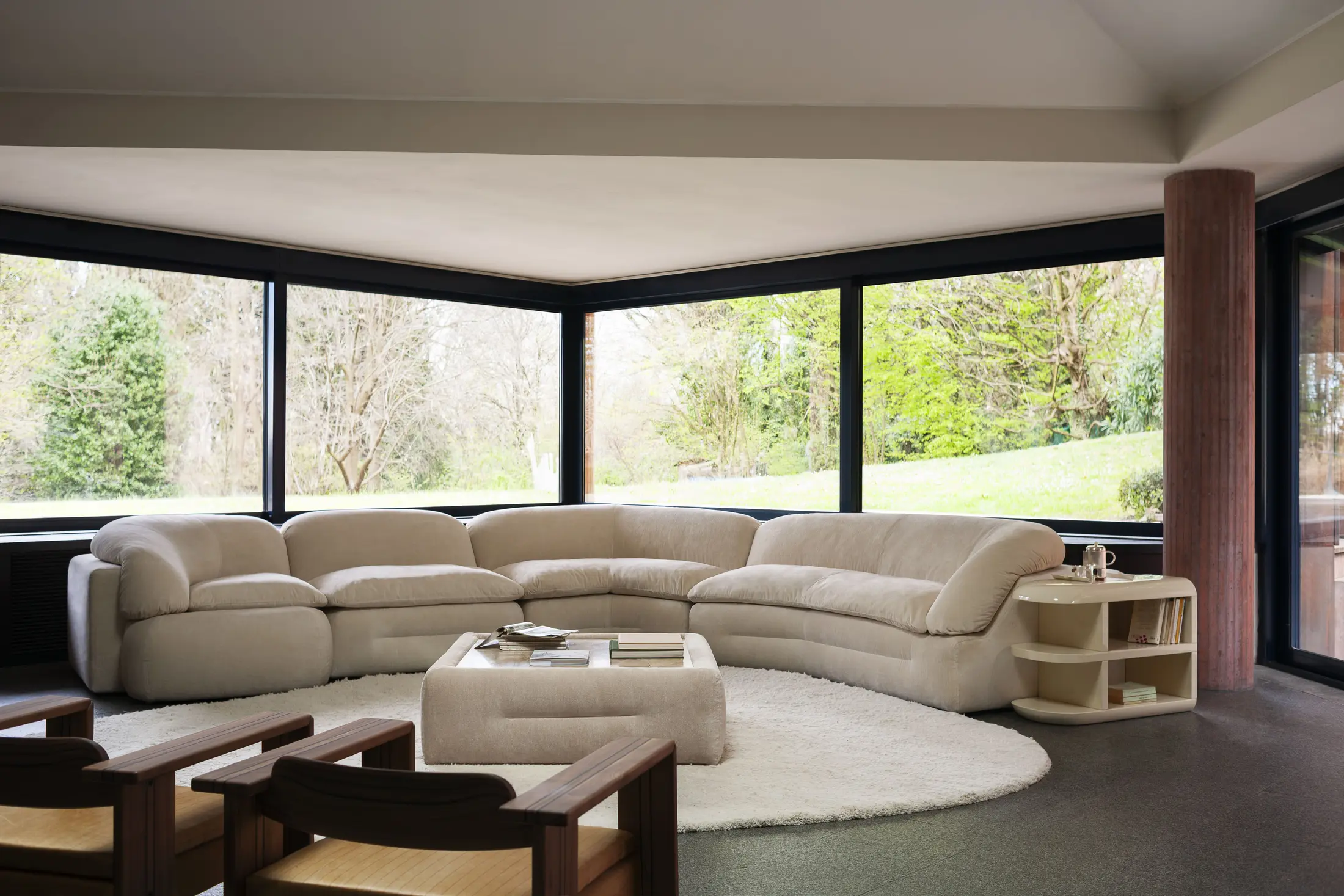
Le Mura sofa in an earth-toned interior
Le Mura · Mario Bellini · Courtesy of Tacchini
Mario Bellini

Le Mura

The room as a soft architecture.

Le Mura is a modular seating system from the 1970s, reissued by Tacchini in 2022 in collaboration with Mario Bellini. Its name refers to walls: individual volumes join in the manner of the large stones used in Roman construction. The idea is architectural, with seating assembled to suit the space rather than confined to one fixed outline.

The current system combines modules of different sizes and shapes. Upholstered volumes sit close to the floor, with distinctive fastening details adding definition. Tacchini specifies a wooden frame, multi-density polyurethane foam and fabric or leather covers for the standard version; selected designs also have a separate Wool version.

In a room, we read Le Mura as a way to organise conversation. A long composition establishes a strong horizontal line, while an arrangement with corners or opposing seats can create an intimate social space. The module plan deserves as much attention as the upholstery.

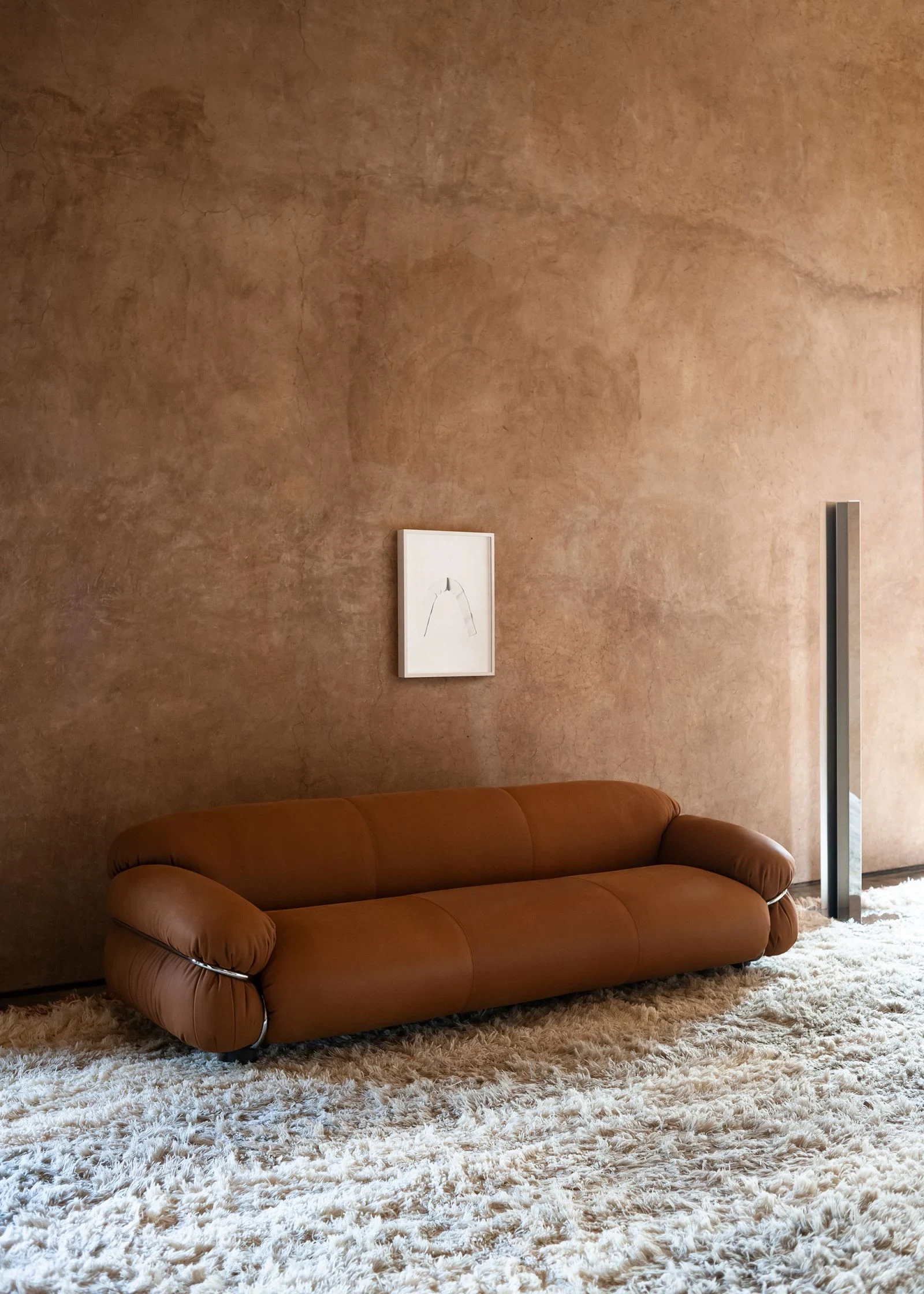
Sesann sofa in a textured interior photographed by Andrea Ferrari
Sesann + Grand Sesann · Gianfranco Frattini · Courtesy of Tacchini
Gianfranco Frattini

Sesann + Grand Sesann

Soft volume, held in a precise embrace.

Frattini designed Sesann in 1970; Tacchini reissued it in 2015. Its character comes from the relationship between generous upholstery and an exposed tubular metal frame. The frame contains the soft forms and makes the act of holding them visible.

The current collection offers Sesann alongside Grand Sesann, which provides a deeper seat. Tacchini lists polished or colour-coated steel for the external structure, stained ash feet and a choice of fabric or leather upholstery. These are variations within a clear design language, rather than entirely different furniture ideas.

We find Sesann especially interesting where softness needs definition. The metal perimeter gives the piece an outline that remains legible in rich fabrics. In a formal interior it can introduce a more relaxed way of sitting; in a casual room, its frame supplies a note of precision.

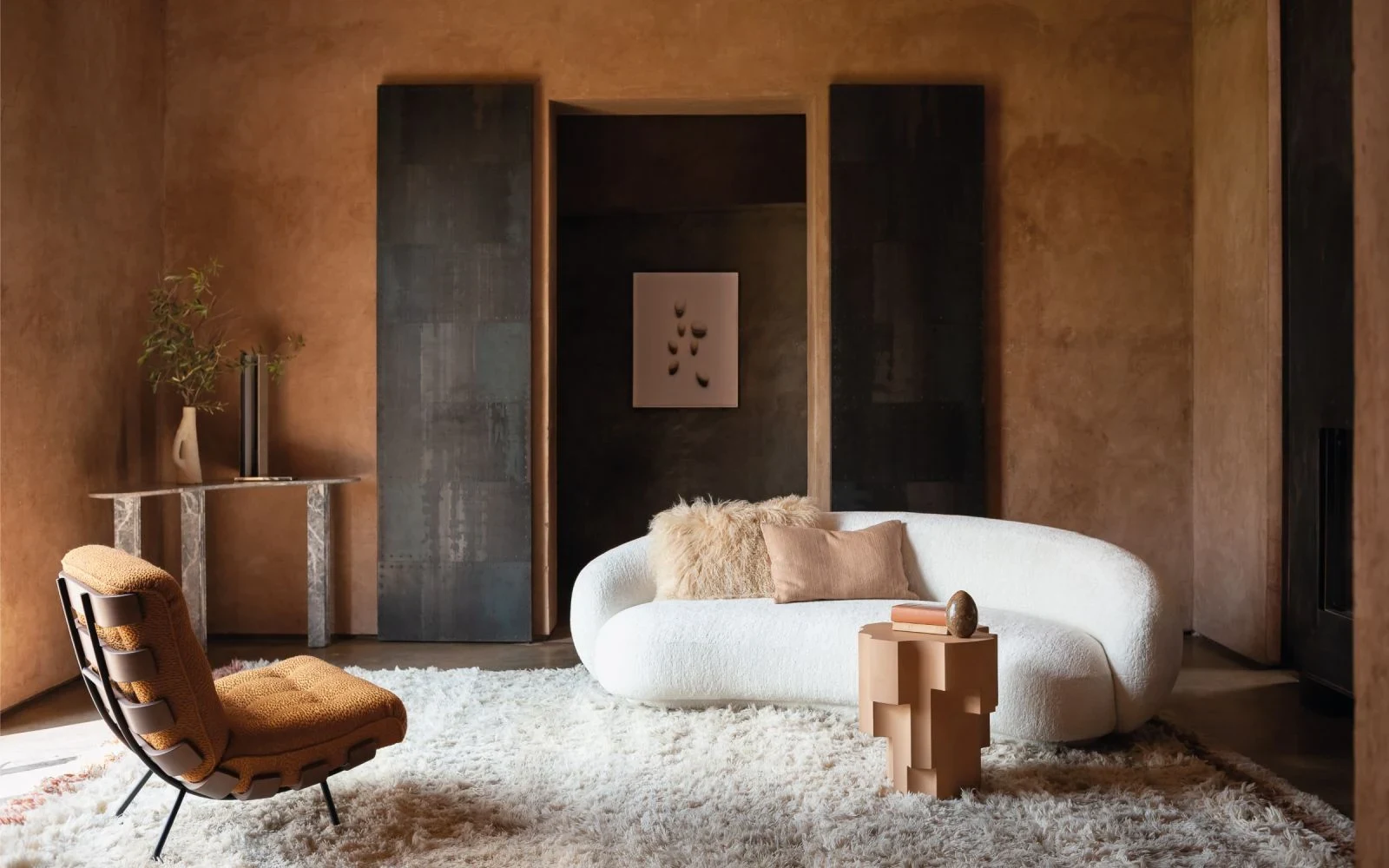
Julep sofa and companion furniture in a warm Tacchini interior
Julep · Jonas Wagell · Courtesy of Tacchini
Jonas Wagell

Julep

A contemporary curve with a sense of familiarity.

Designed in 2018, Julep draws on the simplicity and generous forms of 1950s avant-garde design. Jonas Wagell translates those references into a contemporary upholstered sofa with a continuous, enveloping silhouette. The recessed base makes the full volumes appear to lift from the floor.

The family includes a sofa, chaise longue and island, with an armchair and ottoman offered alongside it. The current product information specifies a wooden internal frame, polyurethane foam padding and fabric or leather covers, with construction varying by version.

For us, Julep’s strength is its ability to feel substantial without looking rigid. A curve can soften an angular room and invite a less formal arrangement of chairs and tables. Its outline also deserves to be seen from more than one direction: leaving space behind it can make the whole composition feel more open.

Butter modular sofa in a modernist interior
Butter · Faye Toogood · Courtesy of Tacchini
Faye Toogood

Butter

Everyday ritual becomes sculptural furniture.

Toogood’s Bread and Butter collection begins with an unusually direct process: models for the sofa were made in butter, while bread was sliced, stacked and balanced to explore the forms of tables. Those familiar materials offered a starting point for furniture shaped around tactility and domestic life.

Butter translates that process into generous upholstered modules. In 2026, Tacchini expanded the family with new elements and companion pieces, including a fixed three-seat sofa, armchair, ottoman, low table and storage cabinet. Bread tables and a console bring wood into the same wider conversation.

Our reading is that the softness works best when it has room to register. Butter can provide the centre of gravity in a living room, with simpler surrounding objects allowing its volumes to remain clear. The collection gives several ways to carry that idea through a space, from one sofa to a broader arrangement.

Read our dedicated Butter highlight ↗
Also in the sofa collection

Orsola · Gastone Rinaldi

Orsola dates from 1970. Its chrome frame and rounded upholstered forms set up a clear contrast between support and softness. Tacchini’s current re-edition retains the original character while using updated padding, with upholstery made by its specialist craftspeople. We see it as a compact expression of the same broader interest in relaxed, expressive seating.

Explore Orsola ↗
Another contemporary direction

Roma Nuvola · Jonas Wagell

Roma Nuvola develops the curved language of Wagell’s Roma family with expanded proportions and soft cushions. The collection includes a sofa and chaise-longue configurations. Tacchini specifies polyurethane foam and feather padding, an ash base and fabric or leather upholstery. It offers a different reading of comfort from the firmer graphic outline of Julep.

Explore Roma Nuvola ↗
04 · Brand portrait

Beyond the sofa.

Chairs, daybeds, tables and lighting reveal just how wide the collection’s design vocabulary has become.

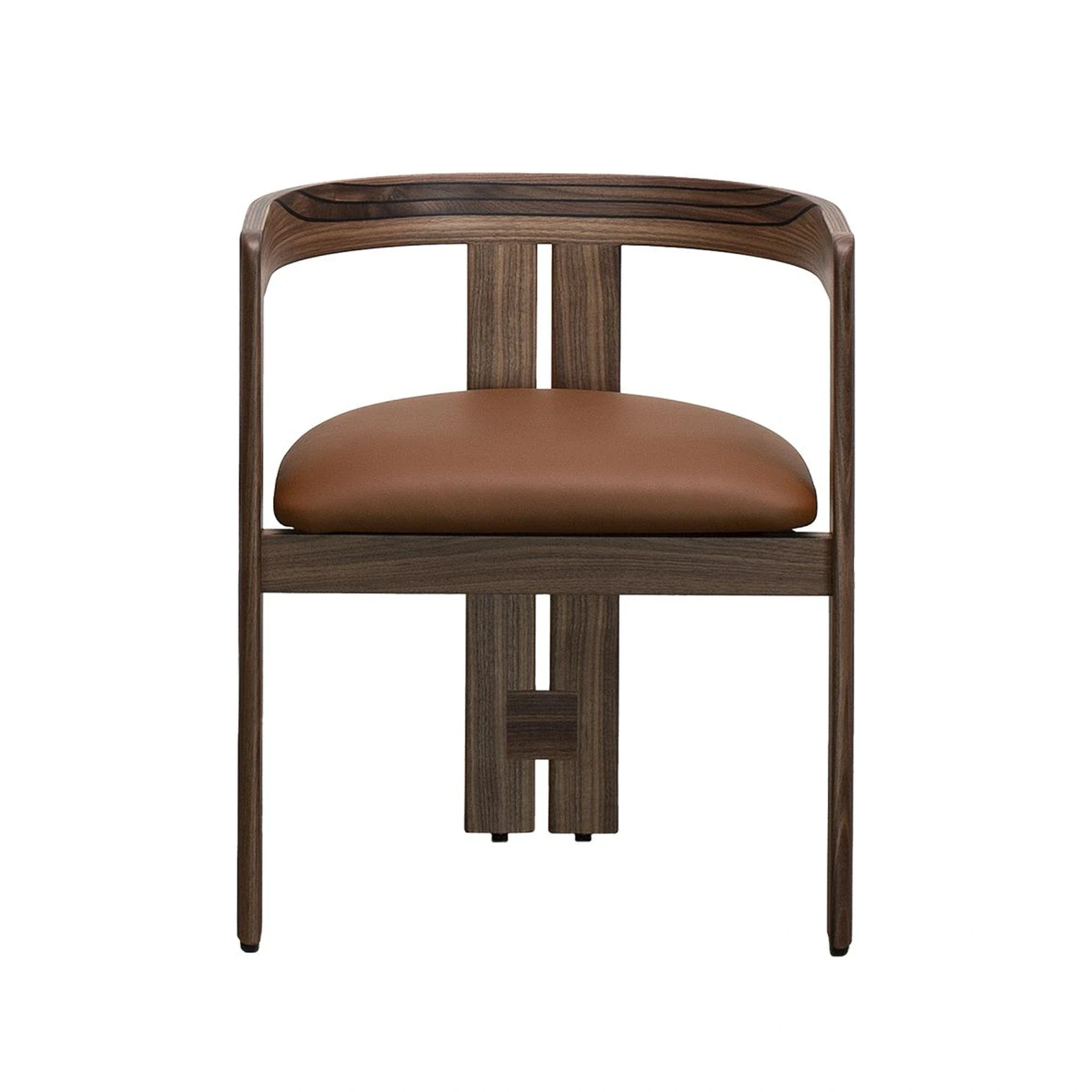
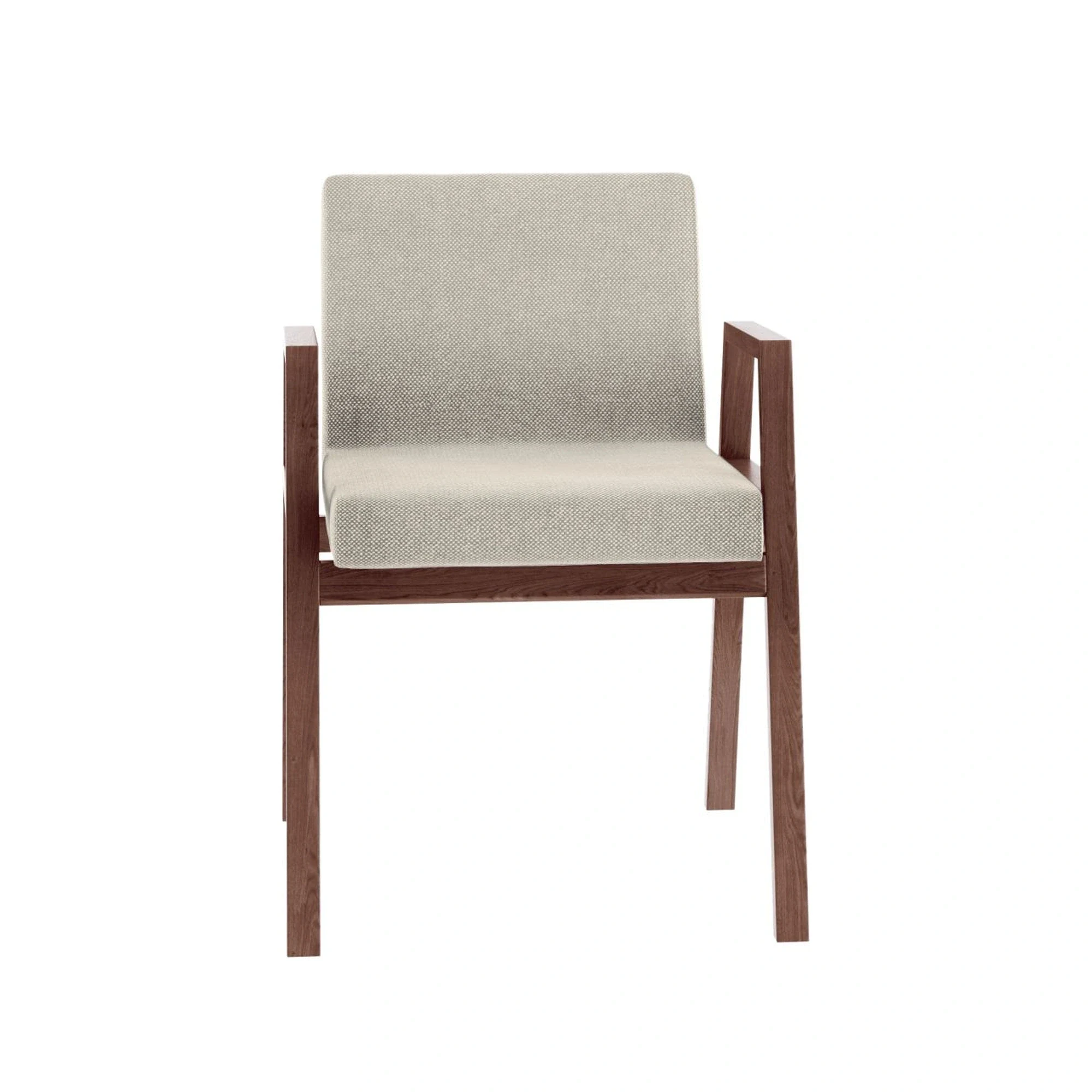
Pigreco by Tobia Scarpa for Tacchini
Tobia Scarpa

Pigreco

The 1959 design uses a triangular idea to give a familiar chair a strong sense of space. Two rear legs are placed close together, maintaining the stability of a four-legged chair while preserving the visual effect of the original concept. Current versions include wood and lacquer finishes, with fabric or leather upholstery. At a dining table, its open structure can create rhythm without forming a heavy wall of chair backs.

Babela by Achille + Pier Giacomo Castiglioni for Tacchini
Achille + Pier Giacomo Castiglioni

Babela

Designed in 1958, Babela makes economy of form into an expressive quality. The lightweight, stackable chair has flat sides that allow neighbouring seats to align closely. Tacchini’s reissue uses an ash base in place of the original steel frame. It is a useful reminder that the collection also includes disciplined, practical designs alongside its more sculptural forms.

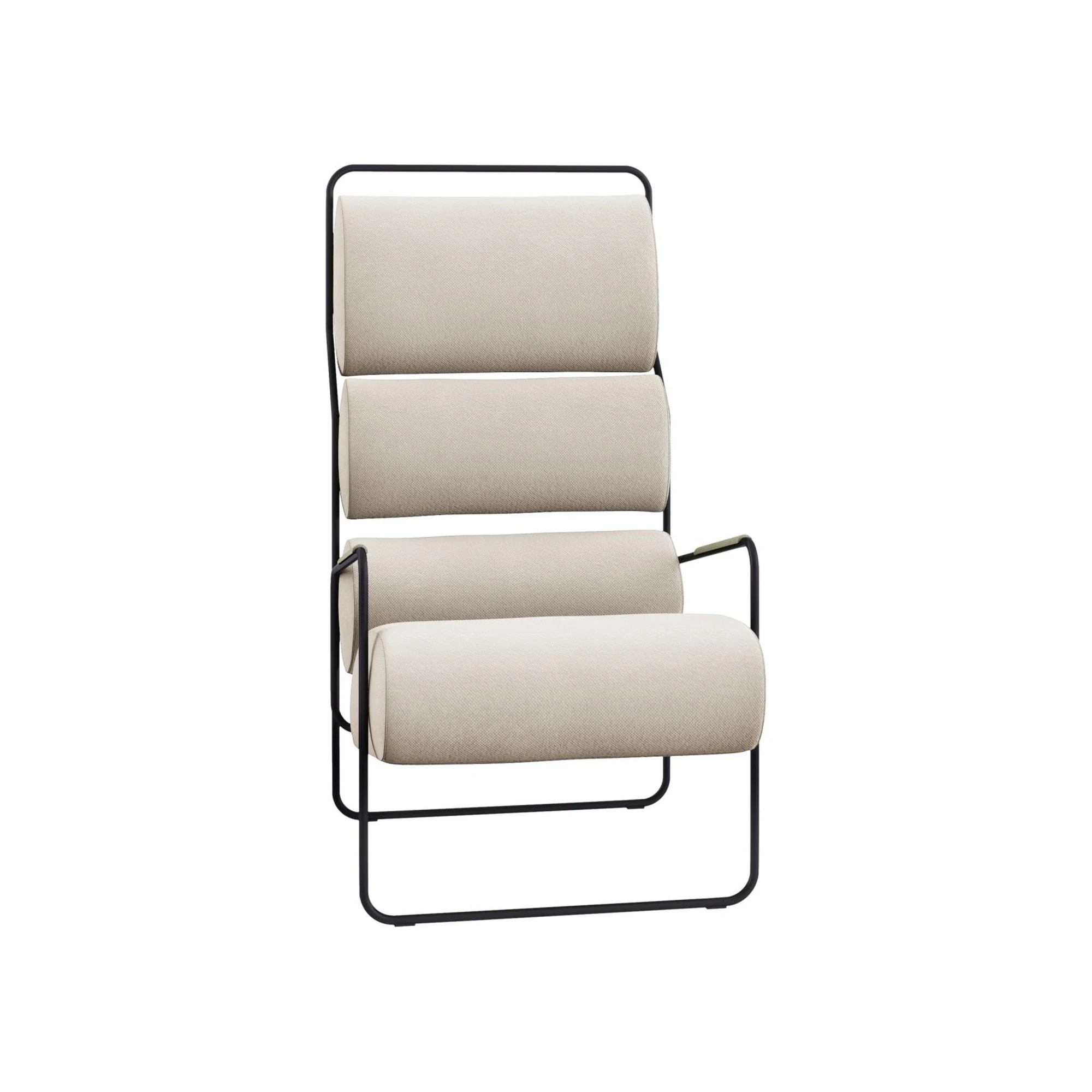
Sancarlo by Achille Castiglioni for Tacchini
Achille Castiglioni

Sancarlo

Sancarlo divides the chair into separate upholstered areas, each supporting a different part of the body. The curved tubular structure makes that arrangement visible. The current padding varies in density to suit the support required in each area. This is an ergonomic idea expressed through geometry, with an outline that remains lively even when the upholstery is restrained.

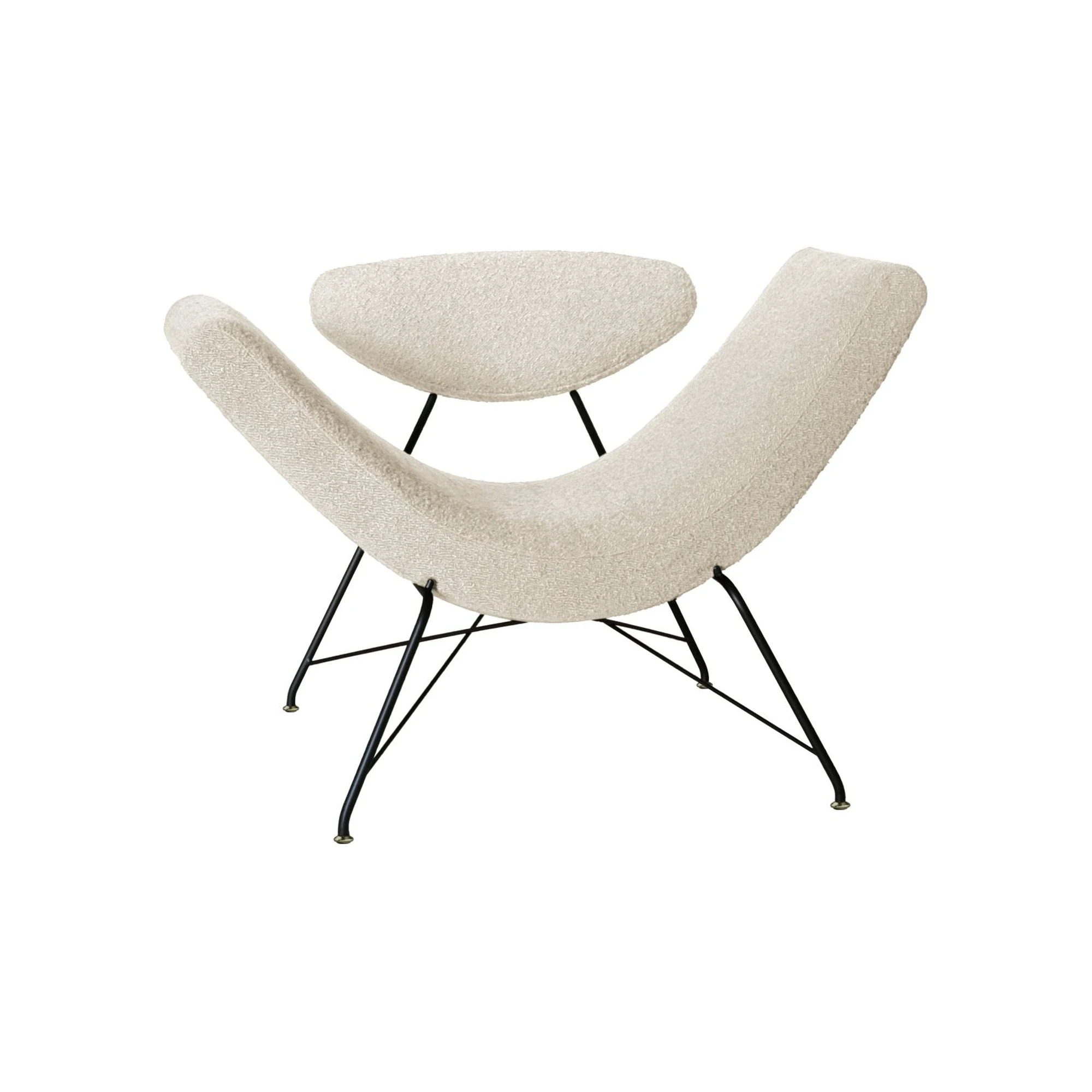
Reversível by Martin Eisler for Tacchini
Martin Eisler

Reversível

Reversível brings Brazilian design of the 1950s into the Tacchini collection. The seat can be positioned in two ways, allowing a more upright or semi-reclined posture. Movement is part of the design rather than an added mechanism concealed behind a conventional silhouette. The metal structure and upholstered elements give the chair a distinctly open, informal character.

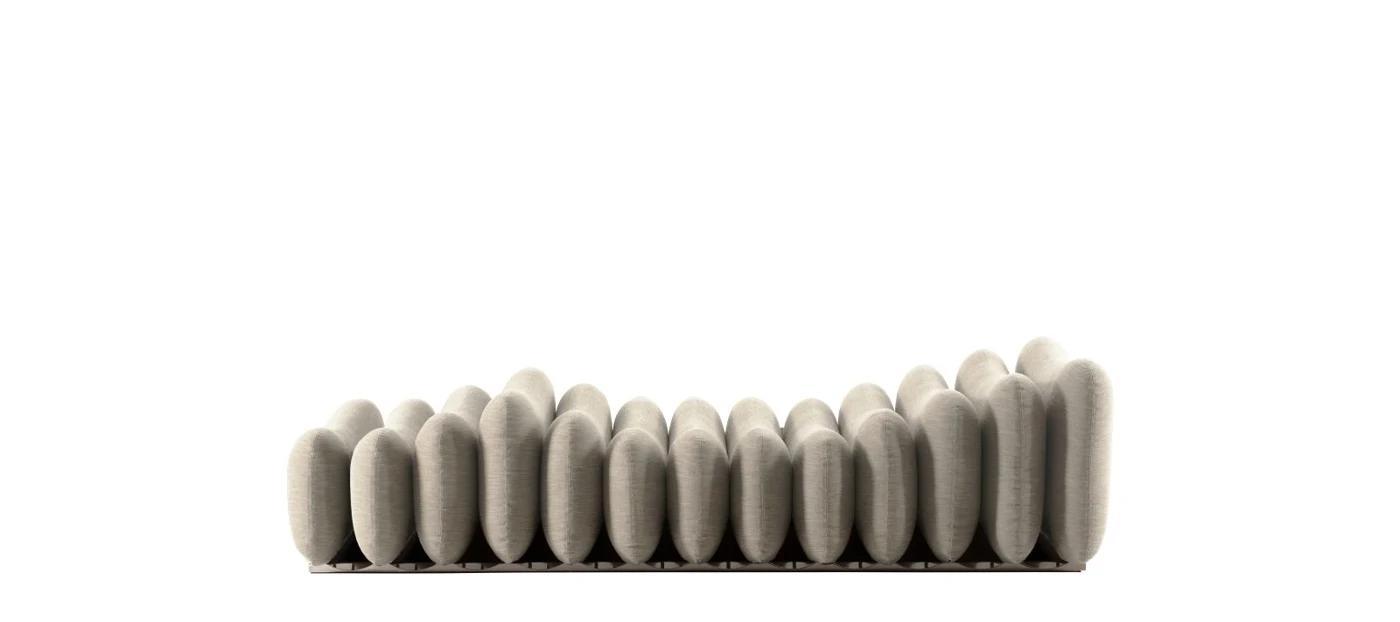
Additional System by Joe Colombo for Tacchini
Joe Colombo

Additional System

Colombo’s system uses cushions in six sizes to explore different arrangements. Tacchini offers a daybed, armchair and ottoman that continue its interest in adaptable seating. The daybed’s wooden frame, foam padding and polished aluminium base support a composition whose main event is the sequence of upholstered volumes. It is furniture conceived as a system of relationships between the body, the object and its surroundings.

Five to Nine by Studiopepe for Tacchini
Studiopepe

Five to Nine

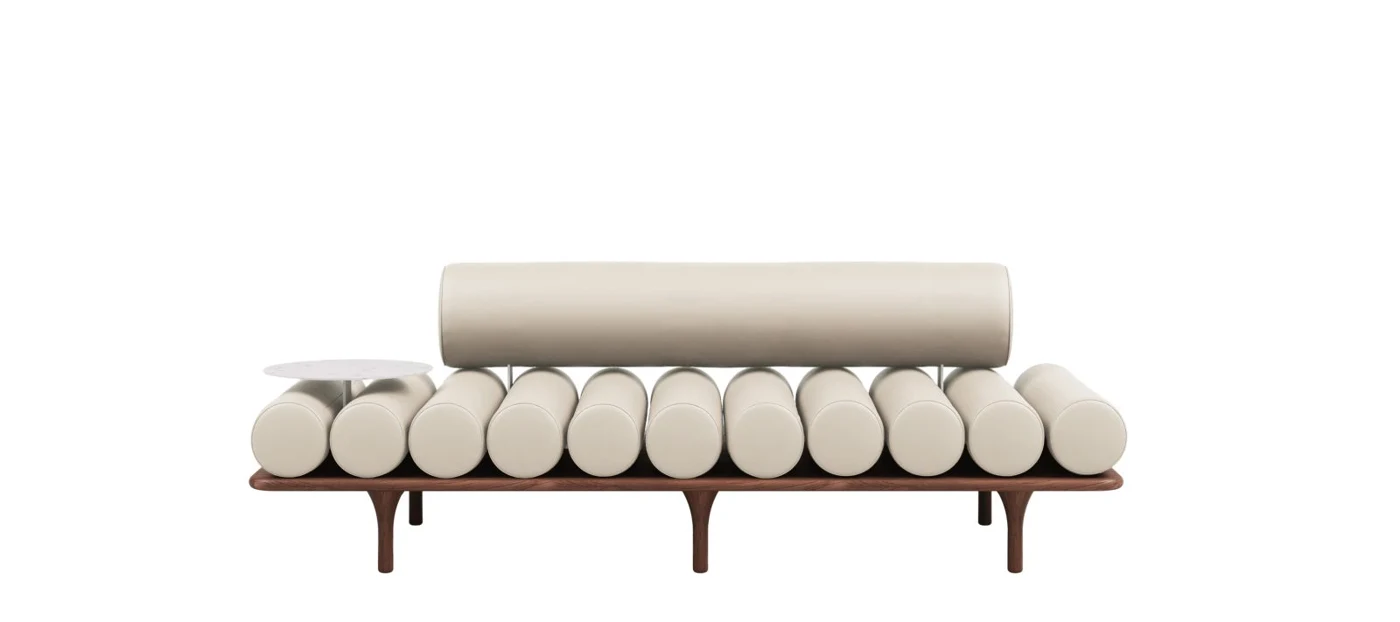
A series of cylindrical cushions rests on a solid ash frame. Options for the back, arms and an adjoining round table allow the daybed to accommodate different uses. Tacchini also describes a special mattress that can be placed over the cushions for guest-bed use. Its character sits between seating and a place to pause, making it an interesting piece for a study, reading room or secondary living space.

Torii Love Dining Table by Studiopepe for Tacchini
Studiopepe

Torii Love Dining Table

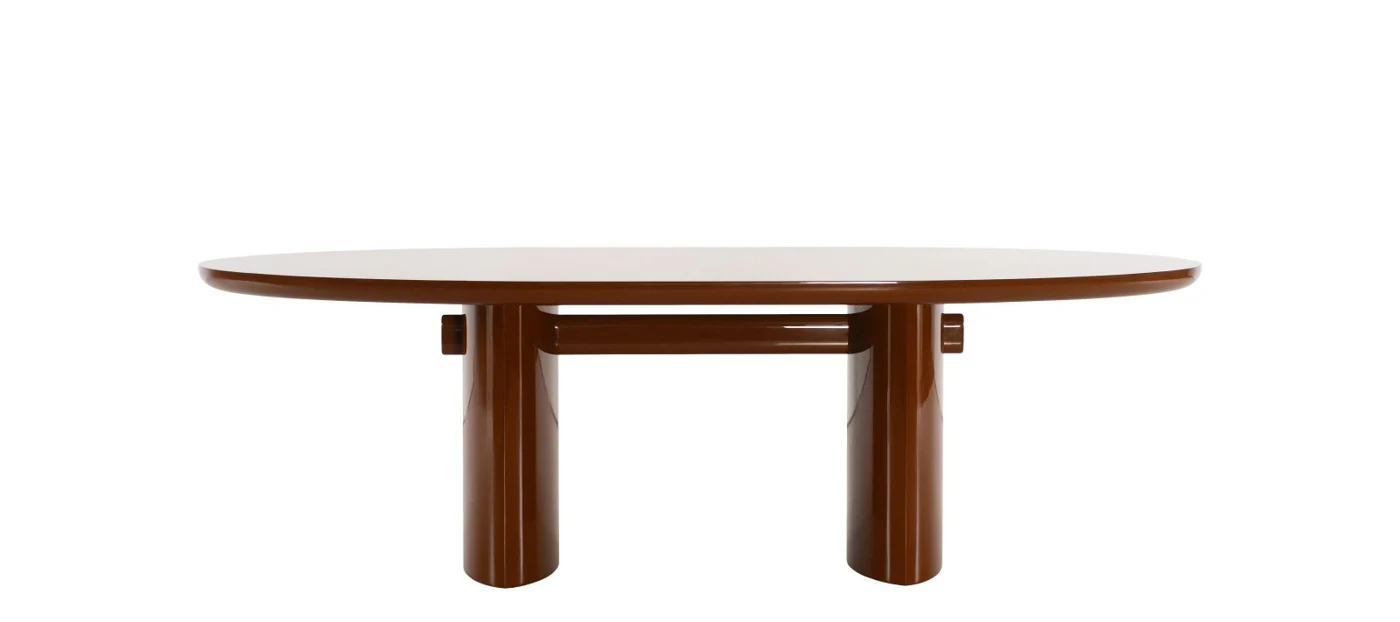
The table carries the architectural idea of Japanese torii gateways into the dining room: a substantial top meets two supports with the presence of pillars. The structure is wood, with the product information describing hand-applied cement or lacquer finishes. It can establish a strong centre to a dining composition, particularly when the surrounding chairs allow the shape of the base to remain visible.

Brut by Roberto Sironi for Tacchini
Roberto Sironi

Brut

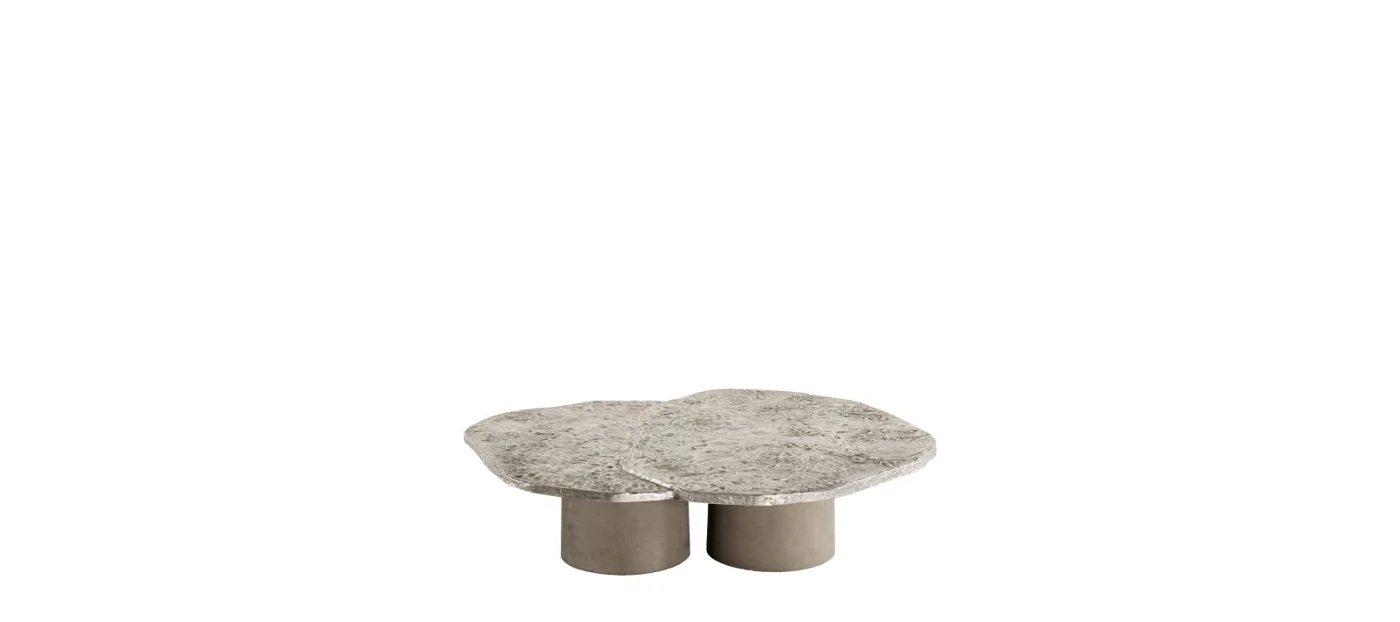
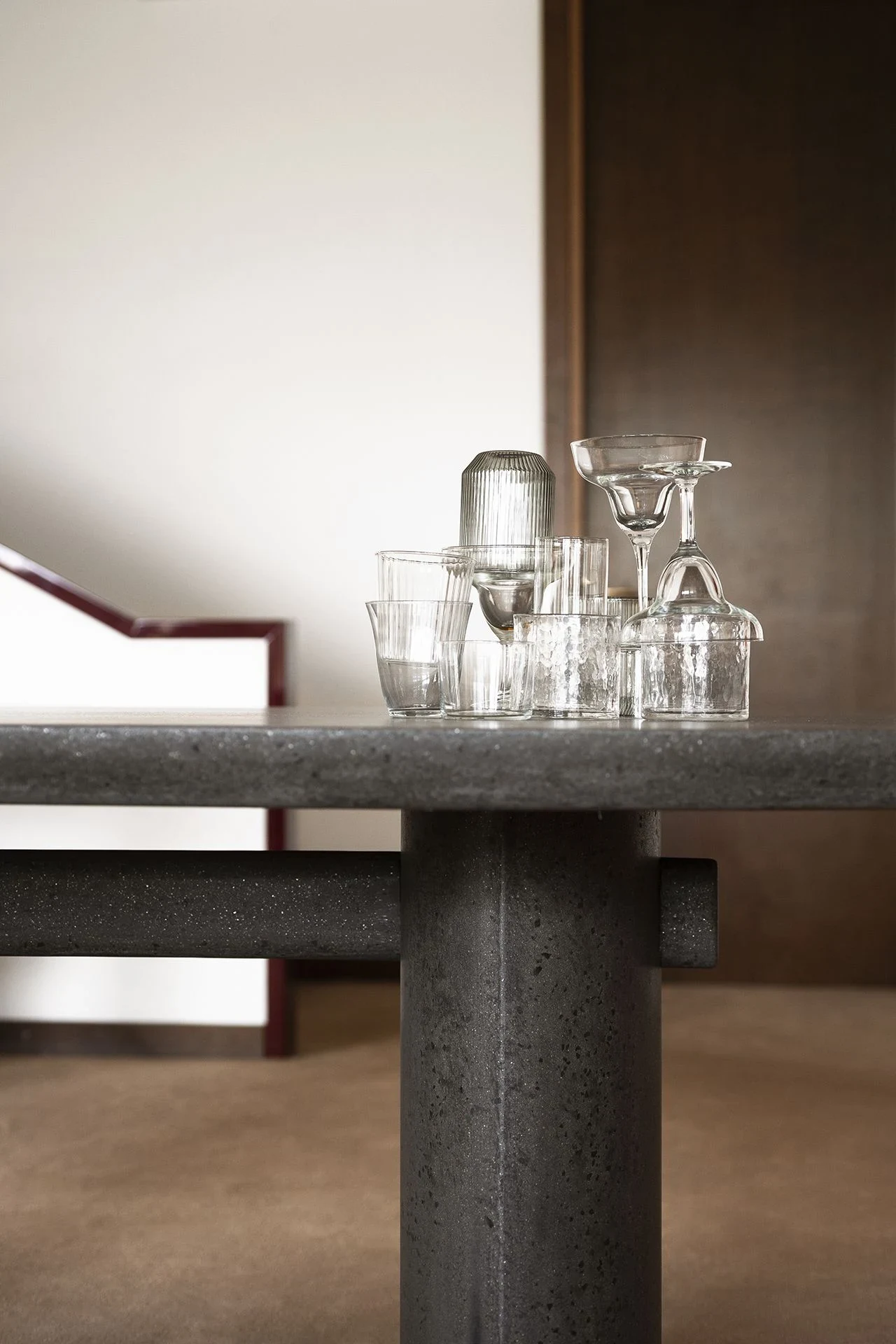
Brut combines a cast aluminium top with concrete legs. Tacchini describes it through references to Art Brut and Brutalist architecture, allowing the process of making and the nature of the material to participate in the result. We find its rougher material expression a useful counterpoint to rounded, carefully tailored seating: the contrast gives both objects greater definition.

E63 by Umberto Riva for Tacchini
Umberto Riva

E63

Riva’s 1963 table lamp uses a folded, shell-like steel form to shelter the light source. Its surfaces give light an architectural setting, making it a small object with a strong presence. E63 extends the re-editions story beyond seating and shows how a historic design can contribute to a room through light, colour and the relationship between solid and open space.

05 · Brand portrait

Many authors.
One conversation.

Historic masters and contemporary studios bring distinct ideas into the same collection.

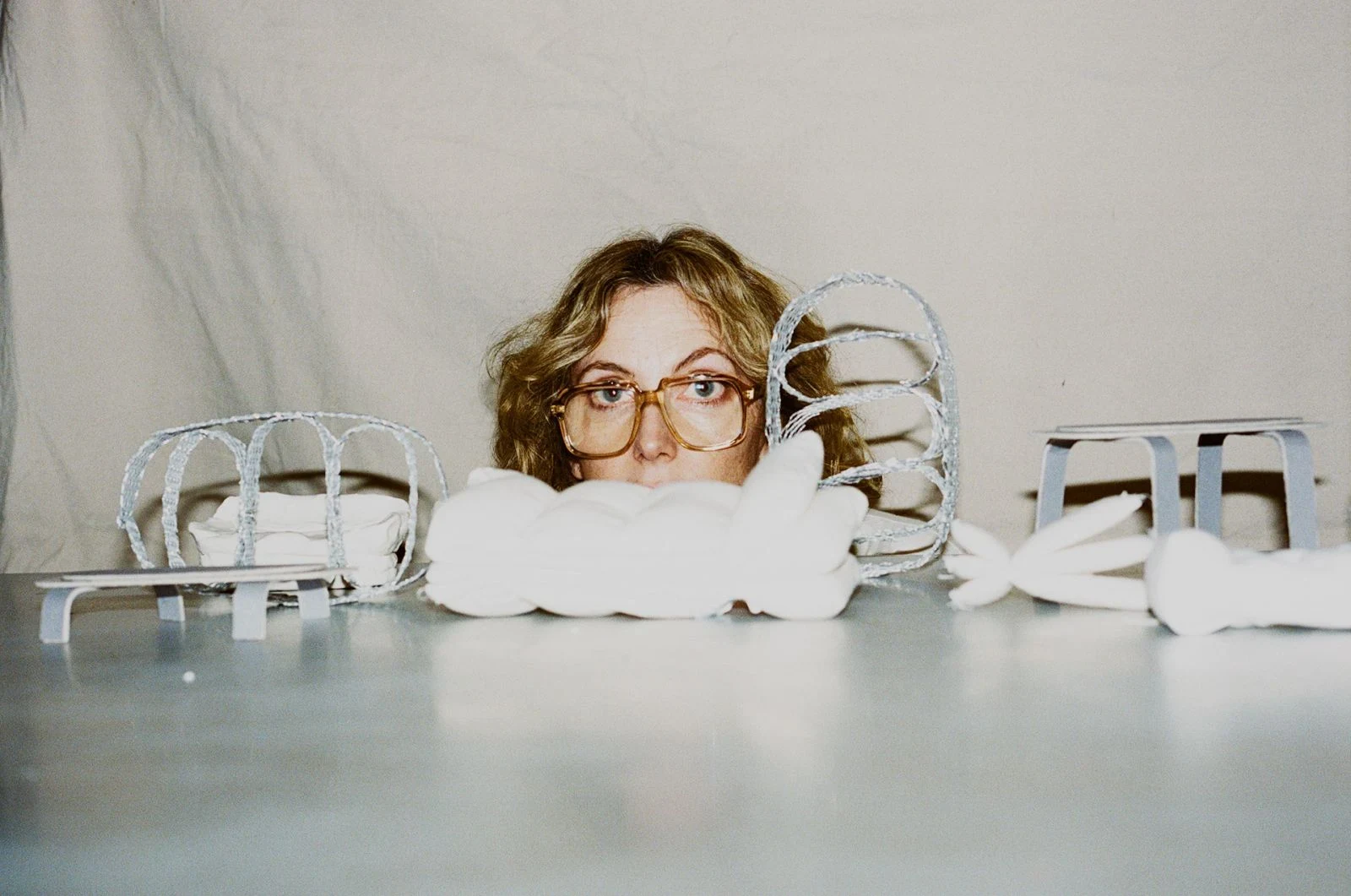
Faye Toogood with furniture models
Faye Toogood · Courtesy of Tacchini
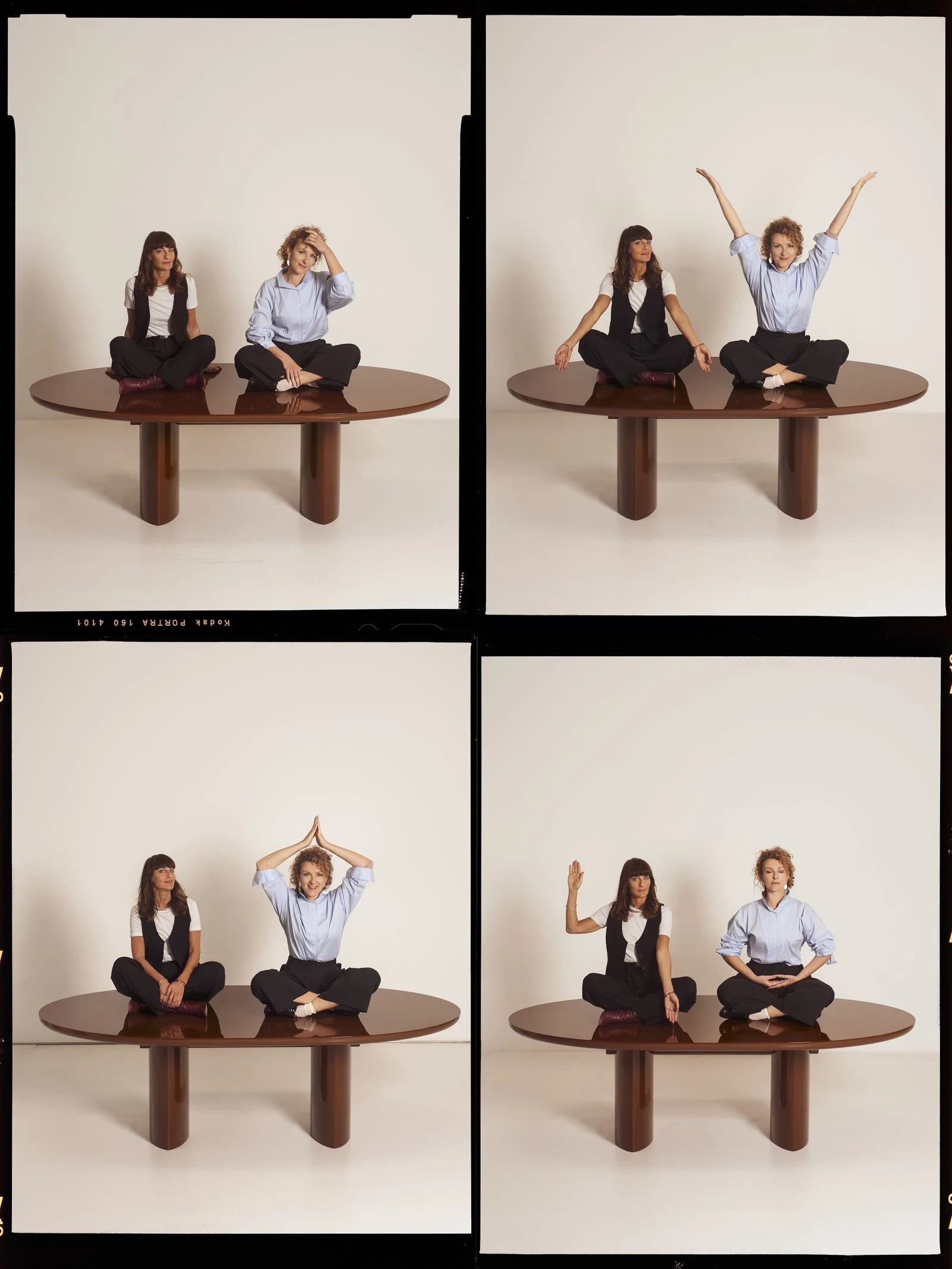
Studiopepe founders Arianna Lelli Mami and Chiara Di Pinto
Arianna Lelli Mami and Chiara Di Pinto · Studiopepe · Courtesy of Tacchini
Architecture + modular life

Mario Bellini

An architect and designer whose work moves between the scale of buildings and the scale of objects. With Le Mura, modularity becomes a way to organise domestic space. The seating system makes his architectural thinking visible through a composition of generous, connected volumes.

In the collectionLe Mura, Le Mura XL

Discover the work ↗
Memory + material discipline

Gianfranco Frattini

Frattini trained as an architect in Milan and worked with his mentor Gio Ponti before establishing his own practice. His designs for Tacchini’s re-editions bring together measured structure and carefully worked materials. Sesann shows how a frame can do more than support upholstery: it can define the character of the whole object.

In the collectionSesann, Agnese, Giulia, Serie 500

Discover the work ↗
Structure + the intelligence of wood

Tobia Scarpa

Scarpa’s approach centres on the relationship between form, function and material. Tacchini’s collection includes Pigreco, Dialogo, Sempronia and Africa, with Artona and Basilan featured in its 2026 presentation. These pieces give the catalogue a strong structural counterpoint to its upholstered volumes.

In the collectionPigreco, Africa, Dialogo, Sempronia

Discover the work ↗
Observation + practical invention

Achille + Pier Giacomo Castiglioni

The brothers’ Babela approaches seating through clear functional requirements. Achille’s Sancarlo, a separate design, explores how different parts of a chair can support different areas of the body. Together, the pieces show two forms of design intelligence: one concerned with efficient use of space, the other with the geometry of comfort.

In the collectionBabela; Sancarlo by Achille Castiglioni

Discover the work ↗
Adaptability + systems

Joe Colombo

Colombo saw furniture as flexible equipment for living rather than a fixed object tied to one setting. Additional System makes that thinking tangible through the aggregation of upholstered elements. The design asks how one vocabulary of components can support several postures, activities and spatial arrangements.

In the collectionAdditional System

Discover the work ↗
Sculpture + everyday rituals

Faye Toogood

The British designer began as a stylist at The World of Interiors before founding an interdisciplinary studio in London. Her practice gives materials and model-making a central role. With Tacchini, Butter and Bread translate familiar household gestures into an expressive furniture language; the Cosmic collection offers another strand of the collaboration.

In the collectionButter, Bread, Solar, Orbit

Discover the work ↗
Clarity + generous curves

Jonas Wagell

Wagell is a Swedish architect and designer who established JWDA in 2008. His background includes graphic and interior design, with studies in Stockholm and New York. His interest in simple, intuitive objects is evident in Julep and Roma: strong outlines carry the design while allowing daily use to remain uncomplicated.

In the collectionJulep, Roma, Roma Nuvola

Discover the work ↗
Colour + material contrast

Studiopepe

Founded in Milan in 2006 by Arianna Lelli Mami and Chiara Di Pinto, Studiopepe works across interiors, product design and creative direction. Its Tacchini projects range from the rhythmic cushions of Five to Nine to the architectural Torii Love table. The studio’s interest in contrasting refined and raw materials also informs Casa Tacchini in Milan.

In the collectionFive to Nine, Torii Love, Pastilles, Pluto

Discover the work ↗
Research + transformation

Roberto Sironi

Sironi’s Milan-based practice explores historical, geographical and anthropological contexts through objects. His studio, founded in 2015, works across products, installations and research. With Tacchini, tables such as Brut, Cassero and the later PietraForma and Colonna foreground the way a material is transformed, giving functional objects a sculptural presence.

In the collectionBrut, Cassero, PietraForma, Colonna

Discover the work ↗

A wider circle of collaborators.

The roster extends beyond these profiles. Tacchini also presents work by Cini Boeri, Vico Magistretti, Carlo De Carli, Gastone Rinaldi, Martin Eisler and Umberto Riva, alongside contemporary contributors including Michael Anastassiades, Monica Förster, David/Nicolas, EWE Studio, Karen Chekerdjian and Umberto Bellardi Ricci. The breadth matters: the collection can bring together different cultures and disciplines without requiring every object to look alike.

See the complete designer directory ↗
06 · Brand portrait

The material
is part of the idea.

Craftsmanship and research shape both the visible furniture and what sits beneath its cover.

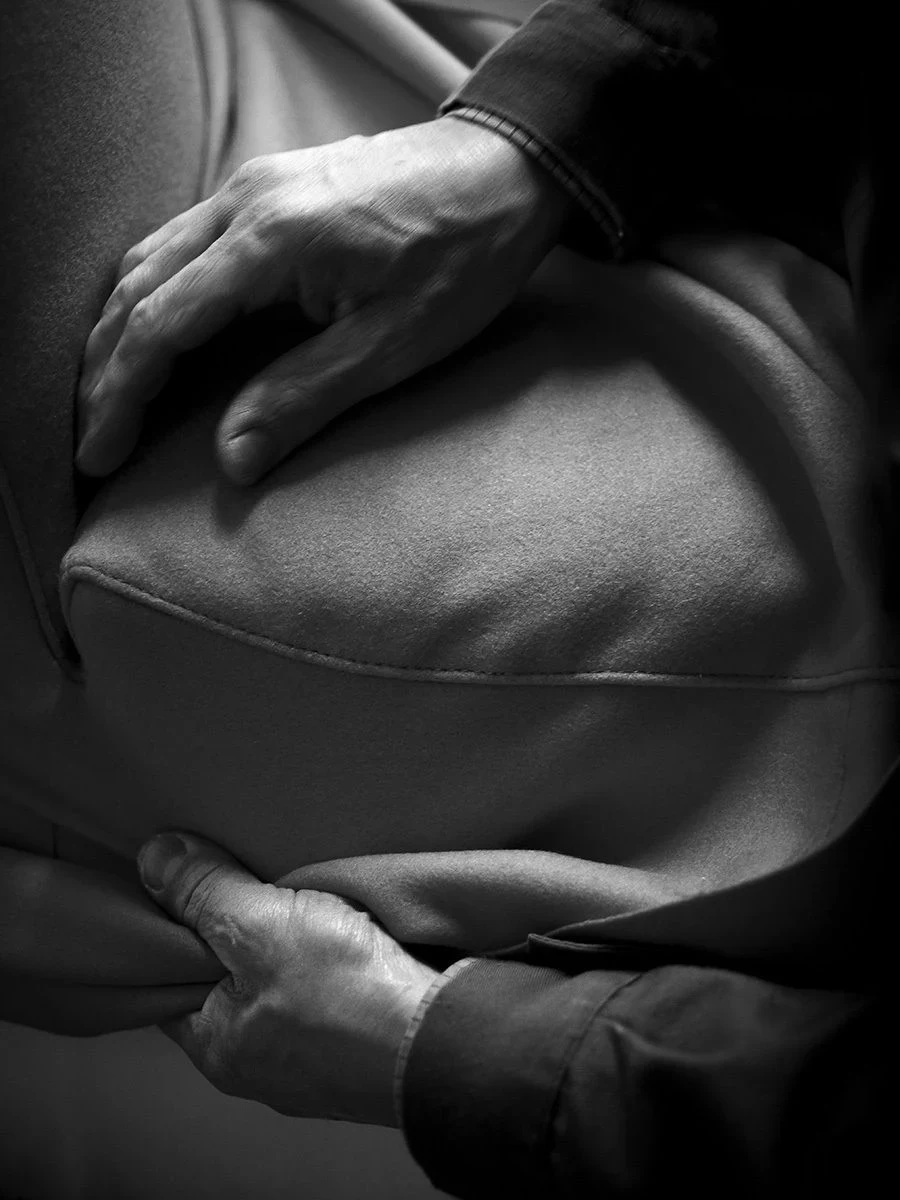
Hands shaping upholstered furniture in the Tacchini workshop
Upholstery work · Courtesy of Tacchini

Quality is a sequence of decisions.

Tacchini describes its craft tradition through the knowledge of Brianza’s makers: the handling of materials, the care of construction and the repetition of skilled gestures. That perspective helps explain why the furniture should be considered close up as well as from across a room.

Our attention goes to the junction between a chair’s back and its frame, the way a seam travels around a curve and the point where upholstery meets metal or wood. These details are part of the visual result. They determine whether a generous form feels resolved, whether a thin edge feels deliberate and whether a piece remains convincing when viewed from behind.

Materials also change how the same outline is read. A textured wool can emphasise a sofa’s volume; a smoother cover may make its seams and curves more apparent. Wood gives structure a different visual temperature from lacquer, while polished metal introduces reflections. The right specification begins with the room and the way the piece will be used.

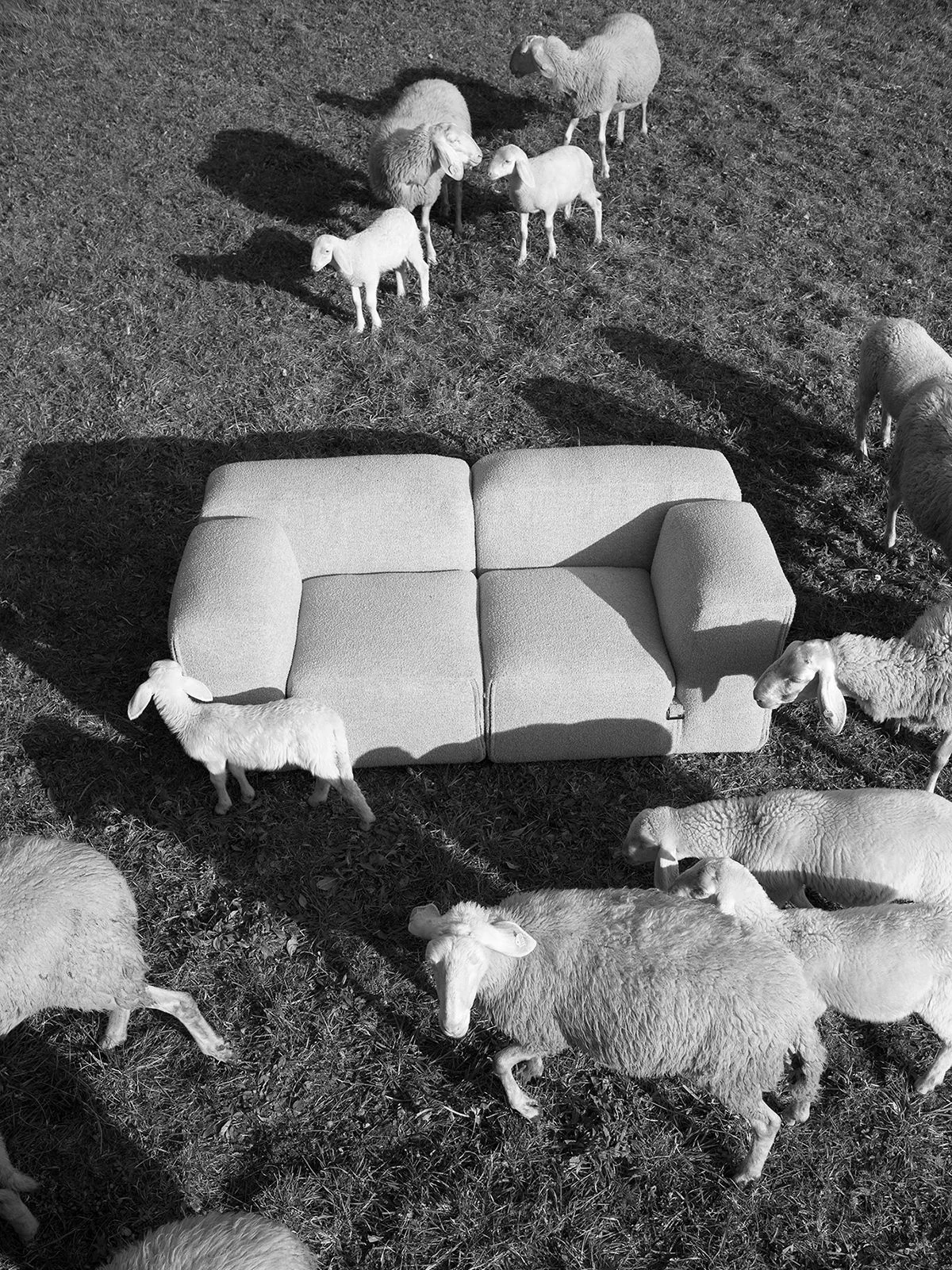
Le Mura Wool seating photographed outdoors among sheep
Flock · Wool upholstery research with Formafantasma · Courtesy of Tacchini
A different approach from the inside

Flock + Formafantasma.

Flock is Tacchini’s collaboration with Formafantasma, the studio of Andrea Trimarchi and Simone Farresin. It investigates upholstery through a method inspired by traditional mattress making, using surplus sheep’s wool as an alternative to industrial foam in selected designs. Tacchini dates the initiative’s launch to 2022.

The change concerns what is inside the furniture. Rather than relying on a visible new style to communicate the research, it revisits the filling of familiar pieces. Tacchini’s current Wool Collection lists models including Le Mura, Costela, Reversível, Sella and selected newer additions.

Availability is specific to the product and version; the Wool Collection should not be read as a claim that every Tacchini sofa uses wool filling. For a project, the useful next step is to confirm the exact model, upholstery construction and feel. Material research has the greatest value when the specification is clear.

Explore the Wool Collection ↗
07 · Brand portrait

Casa Tacchini:
the collection as a home.

Torii Love dining table in a domestic setting
Torii Love · Studiopepe · Courtesy of Tacchini

Casa Tacchini in Milan occupies an apartment of nearly 300 square metres in Brera, at Largo Claudio Treves 5. The original residential layout is retained, placing the collection within a sequence of rooms rather than a conventional open showroom floor.

Studiopepe’s contribution emphasises material, light and colour, bringing refined and raw surfaces into dialogue. The setting gives historic re-editions and contemporary pieces a shared domestic context. Each room allows the objects to interact with architecture and with one another.

For us, this is an especially useful way to understand the brand. A collection becomes more convincing when it can sustain a complete room: foreground and background, a place to sit and a place to set something down, a striking object and a quieter supporting piece. Tacchini’s strength lies in the relationships between those elements.

Discover Casa Tacchini ↗
The continuing story · 2026

Evolution alongside rediscovery.

The 2026 collection expands the Butter family, adds Artona and Basilan by Tobia Scarpa and introduces eleven gloss and matt lacquer finishes. These sit beside further development of established collections and new material work. It is a useful snapshot of the brand’s method: broaden an existing idea, revisit an important design and make space for another way of working.

For an interior, the practical value is a wider range of relationships. Lacquer can introduce colour into a composition centred on textiles and wood. A new companion piece can carry a collection’s character beyond the sofa. Historic designs can remain present while the available palette and configurations continue to change.

Explore the 2026 collection ↗
Tacchini at Kiosk · Toronto

Bring the story
into your room.

Explore the collection with our team, from a single piece to a complete furniture plan.

Sources + photography

Researched from Tacchini’s company history, interviews, designer biographies and current product information, with additional background from Roberto Sironi’s studio. The interpretation of how pieces work in a room is Kiosk’s editorial perspective. Product versions, finishes and specifications should be confirmed for each project.

Photography and product imagery courtesy of Tacchini. Sesann interior photography: Andrea Ferrari. Additional product sources are linked alongside the individual pieces. Editorial research: October 2026.

Explore the archiveAll highlights ↗