
141
Series.
A moment of molten glass, held in light.
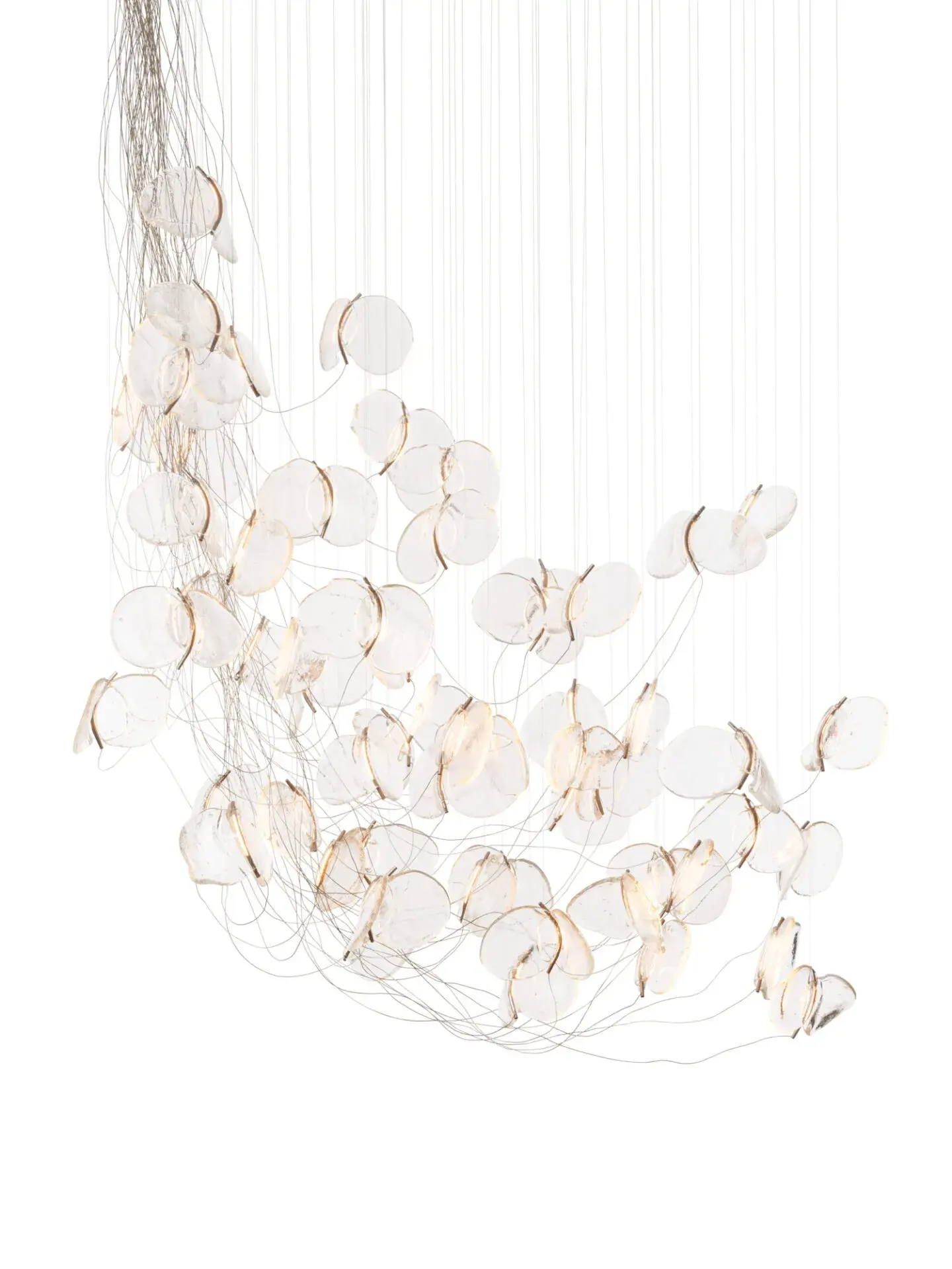
Two pours.
One fleeting form.
141 begins with a gesture in the workshop: two portions of molten glass poured by hand across a curved rod.
The overlapping pools spread, then open outward as the rod is lifted. Each pour settles differently, leaving a pendant with its own outline. An LED replaces the rod, bringing light into the channel left by the making process.
Look closely and the appeal is in those differences: a softened edge, an uneven sweep, the way one piece catches the light beside another. Suspended alone, 141 reads as a small glass sculpture. Gathered together, the individual forms create a composition that changes as you move around it.
Watch glass
take shape.
Bocci’s official 141 process film follows the making of the pendant, revealing the movement behind its distinctive form.
Watch the 141 process film on Vimeo · Film by Bocci
A practice led
by materials.
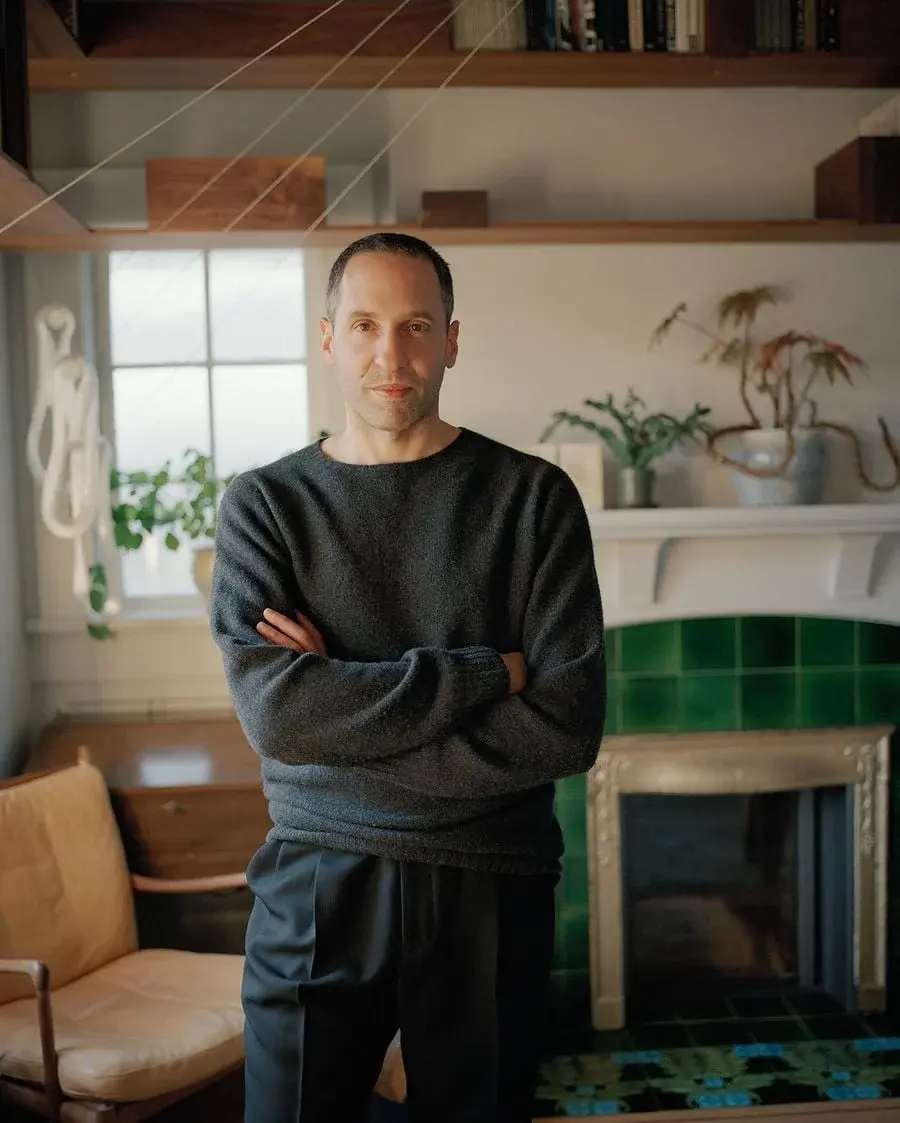
Based in Vancouver, Omer Arbel works across architecture, sculpture, invention and design, investigating how materials behave and how light can shape our experience of space.
For Arbel, a material’s physical and chemical properties are a starting point for discovery. His work asks what can emerge through experimentation: a new surface, an unexpected structure, a different way of holding light.
Bocci, which he co-founded in 2005, gives this research a place to develop through close collaboration with craftspeople. Its lighting is developed, engineered and fabricated in house, connecting an experimental idea to the practical demands of a finished object.
141 makes that approach especially visible. The workshop gesture remains legible in the glass; variation becomes part of the composition. It invites us to appreciate the light through the process that created it.
One pendant.
Many scales.
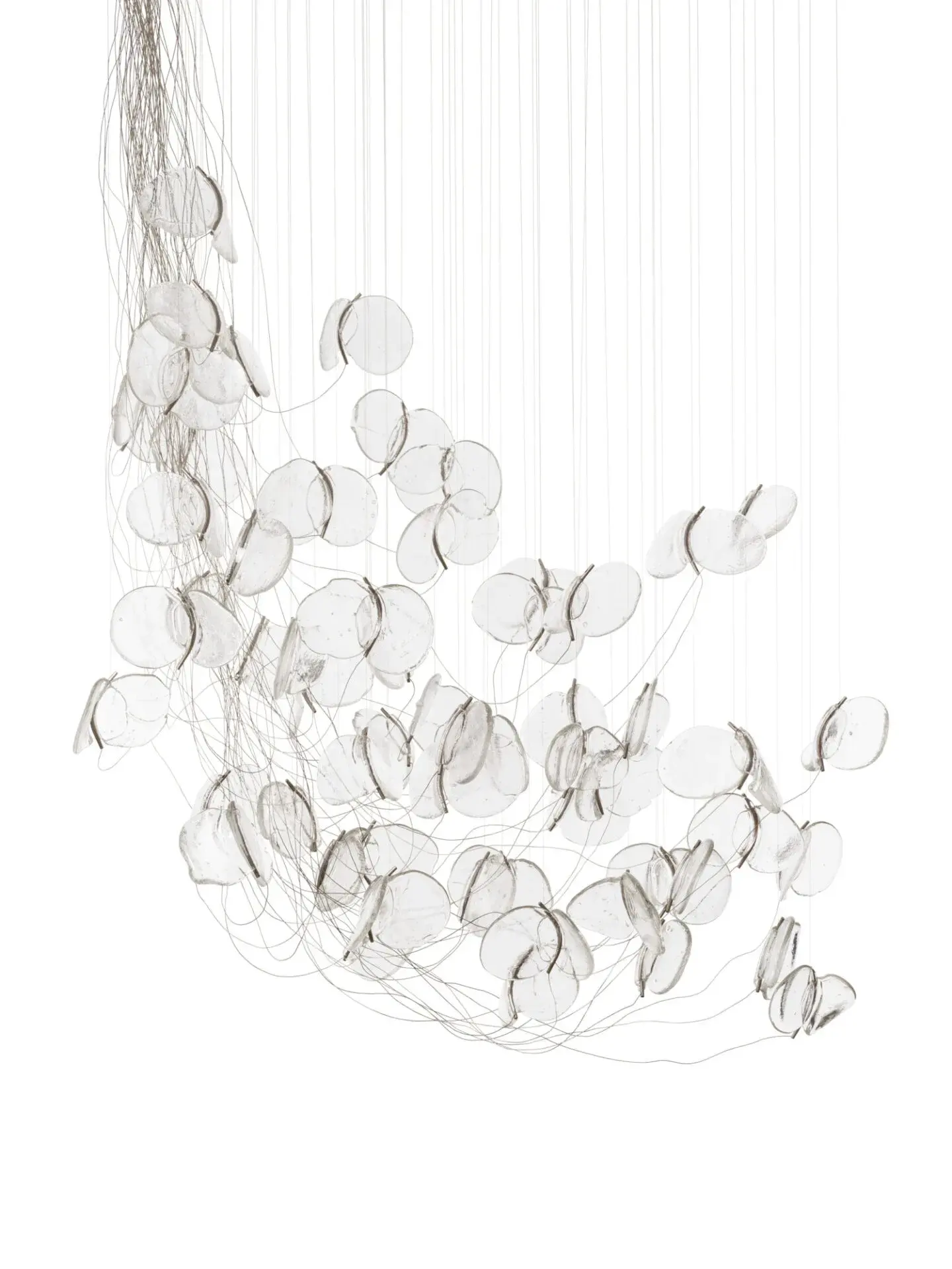
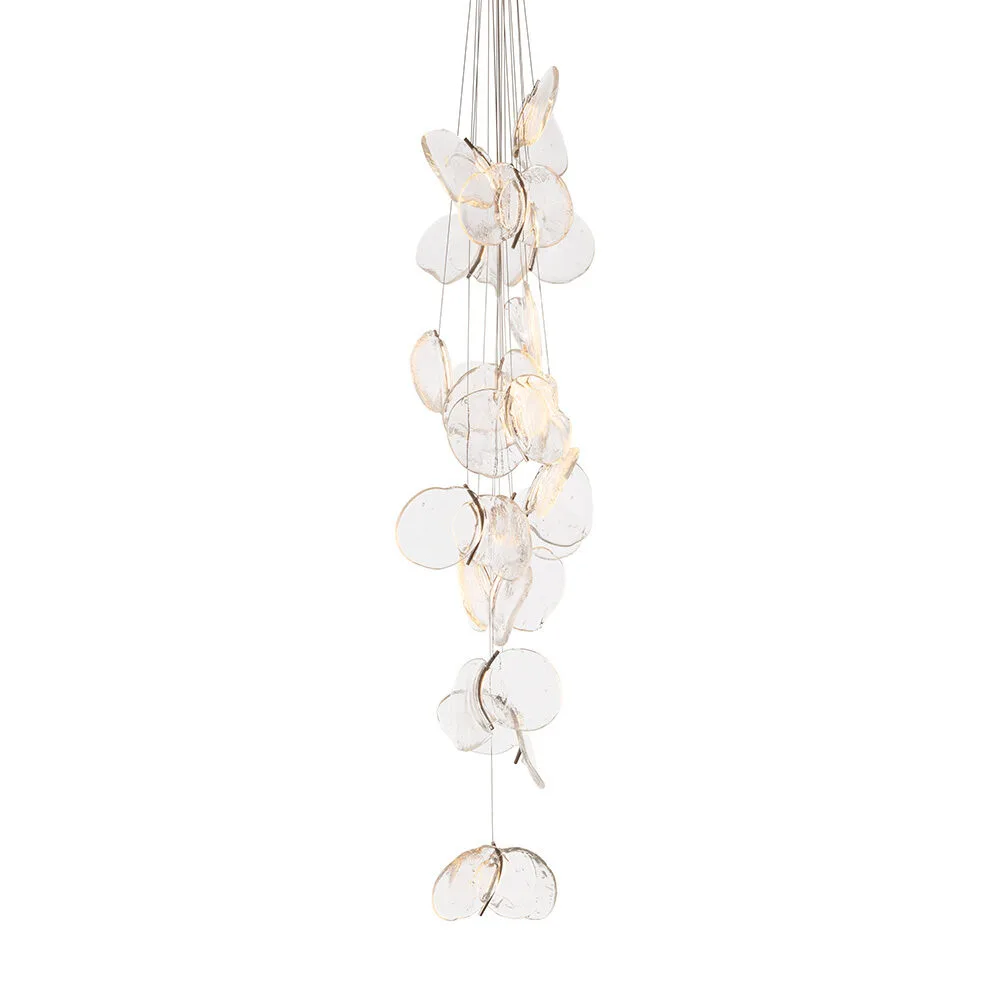
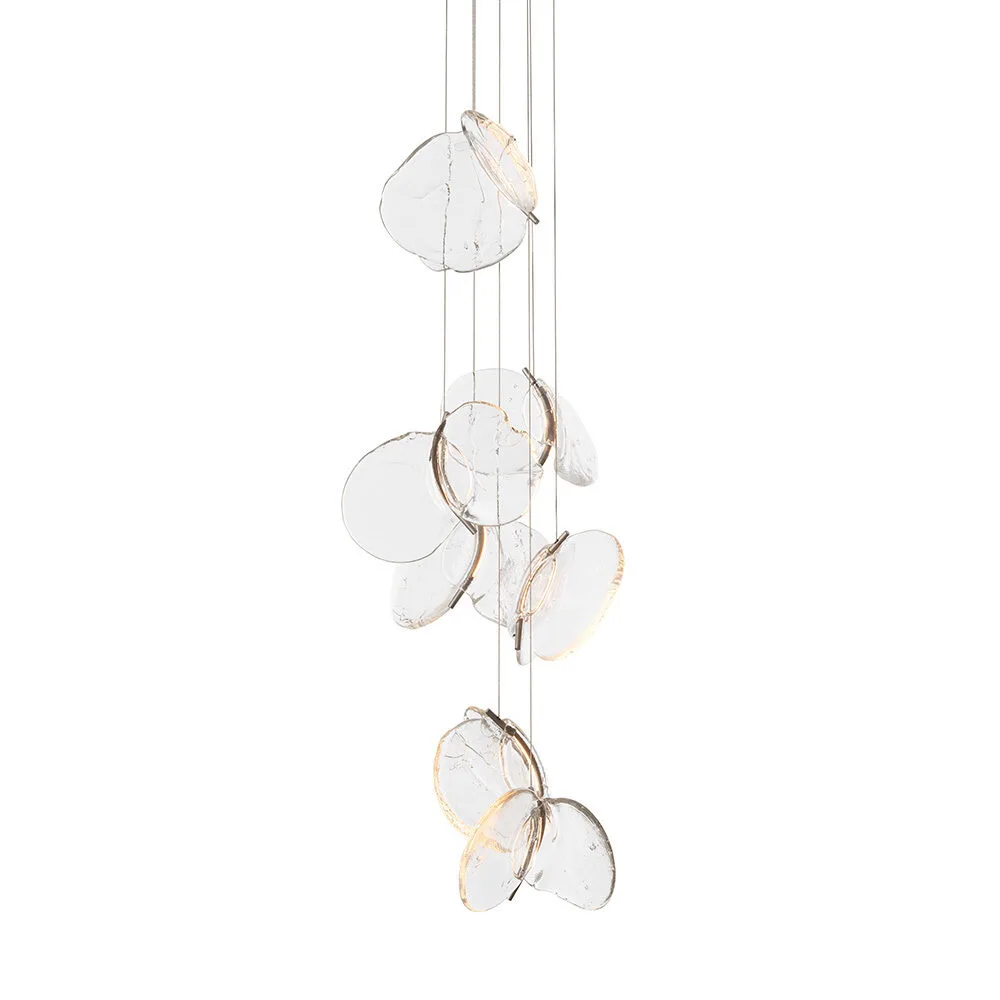
Series 141 is specified through both pendant count and suspension type. A single light can mark a quiet point; random compositions spread horizontally; cluster columns gather more tightly; sculptural cable arrangements use extended drops to draw through a tall volume.
From a drop
to a landscape.
The number after 141 identifies the pendant count: 141.7 brings together seven lights, while 141.19 contains nineteen. Spacing, height and suspension turn that count into a composition—an intimate grouping above a table, a vertical presence in a stairwell or a broad field within a generous room.
Quiet when off.
Amber when on.
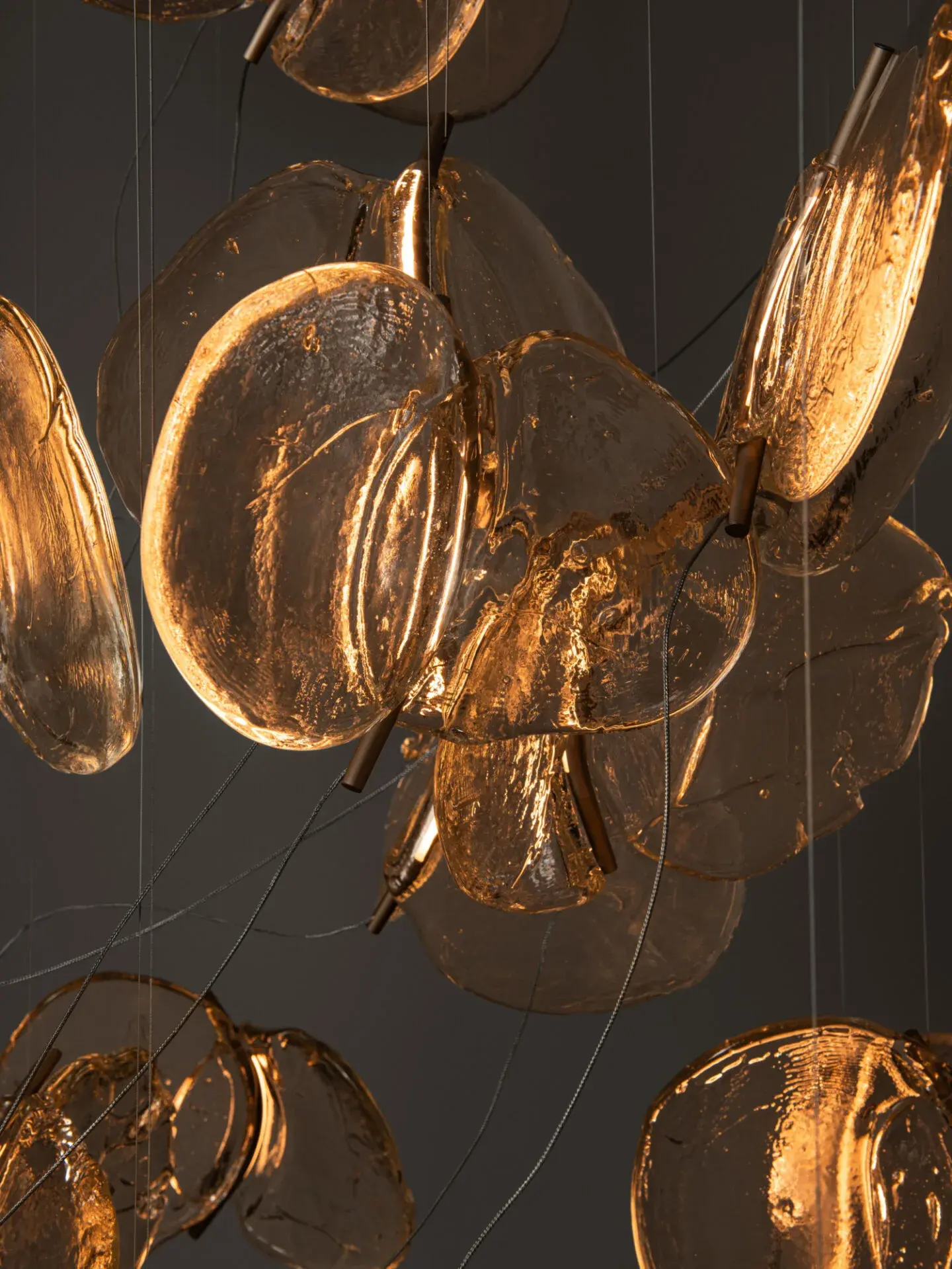
Unlit, 141 is pale and graphic: glass edges, fine suspension lines and the space held between them. Illuminated, each pendant develops a warmer centre while retaining its irregular perimeter.
That change matters in a room. The installation can remain visually light during the day, then gather intimacy after dark without becoming a conventional shade or chandelier.
Compose the
empty space.
Begin with the room height and the volume the installation should occupy—not only the ceiling point.
Choose a tighter cluster for intensity or a more open arrangement when transparency and long views matter.
Use cable lengths to establish a level horizon, a vertical fall or a deliberately irregular contour.
Plan dimming early so the 2500K light can move from sculptural glow to useful ambient illumination.
Draw with
light.
Kiosk can develop a 141 composition around your ceiling, sightlines, pendant count and preferred suspension format.